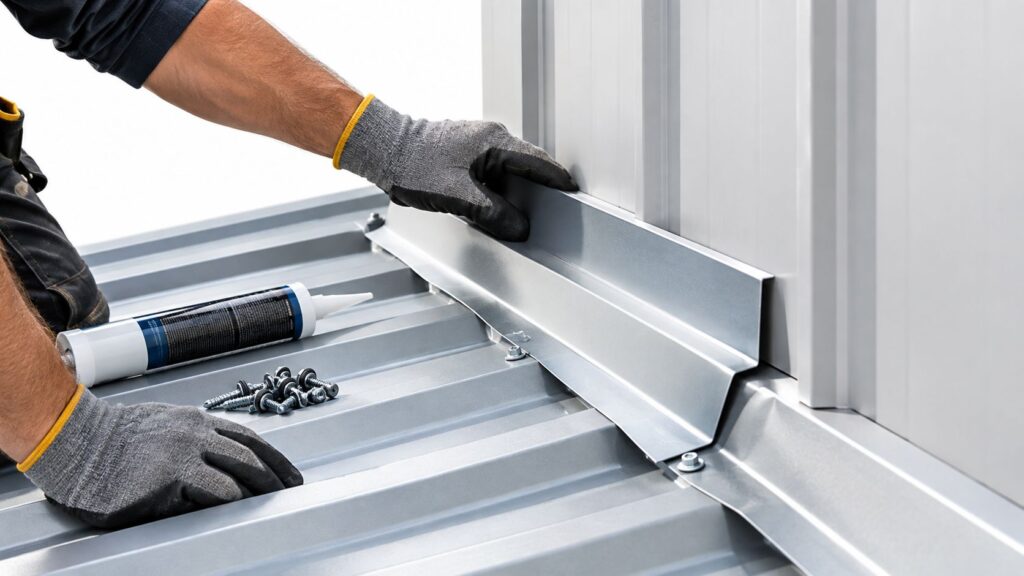
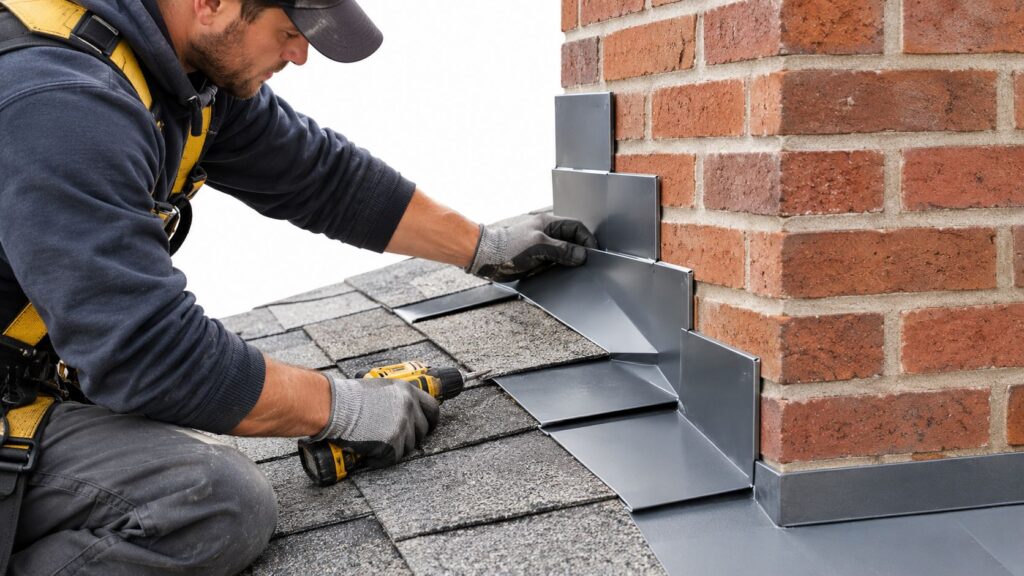
You can lose an entire half-day in Fort Worth, Arlington, or Grapevine just waiting on a missing gutter bundle. The crew is on site, the roof is open, and the supplier says the truck is “close.” That's usually when contractors start searching guttering suppliers near me, because the problem isn't distance on a map, it's whether someone can get the right material to the job, cut to length, and there when the crew needs it.

Table of Contents
- Why Local Sourcing Matters for DFW Contractors
- How the DFW Supply Network Operates
- Key Specifications to Verify Before Ordering
- Evaluating Delivery and Logistics Options
- Real-World Supplier Performance in Action
- Building Your DFW Supplier Checklist
Why Local Sourcing Matters for DFW Contractors
A gutter crew can lose half a day waiting on coil, downspouts, or hangers that were supposed to be on the truck. The roof is open, the foreman is on the clock, and the schedule slips while everyone waits. That delay costs more than the material line item. It burns labor, creates coordination headaches, and puts pressure on the homeowner or GC.
The supplier next door still has to perform
A nearby yard only helps if it can feed the job. Across the Dallas–Fort Worth metro area, traffic, route timing, and branch coverage decide whether a supplier is useful on a production run or just close on a map (DFW metroplex coverage). Fort Worth remains a major anchor city in the region, and that size keeps demand steady for exterior packages, repairs, and reroof work (Texas Comptroller metroplex data).
That matters because gutter supply is a working trade channel, not a small retail aisle. A growing market pushes contractors to expect stocked inventory, recurring order support, and delivery that does not stall a crew. The branch that can turn around common parts fast has an edge over the one that only looks close on paper (market projection).
Practical rule: the cheapest gutter supplier is the one that does not stop your crew.
What “local” really means on a jobsite
Local means the supplier can serve your radius without creating a second problem. If the job shifts from Fort Worth to Arlington, or from Grapevine to Hurst, the yard still has to answer the phone, pull the order, and get it moving.
Contractors need more than counter sales. They need trade pricing, same-day dispatch, and cut-to-length logistics that match the pace of the job. That is the gap between a retail stop and a real production partner. A supplier that understands those trade-offs saves labor hours, keeps trucks moving, and reduces the chance that one missing bundle slows the whole install.
How the DFW Supply Network Operates
A supplier can be local and still miss the job if it is built for walk-in traffic instead of contractor volume. In DFW, the test is whether a yard can keep common gutter material moving, not whether it sits close on a map. A crew in Fort Worth, Arlington, Euless, Hurst, or Grapevine needs a branch that can pull orders quickly and speak the language of production.
That usually means trade pricing, steady stock, and delivery that matches the pace of the install. Contractors sourcing K-style aluminum, elbows, downspouts, hangers, and sealants do not want to wait while a counter team checks every item one by one. They need a supplier that treats recurring volume as normal business, not a special request.
Inventory depth matters more than a polished storefront. The best yards keep the parts that move every week, then fill in specialty pieces without slowing the loadout. That is where a contractor supplier earns its keep, because one missing fitting can stall a truck and turn a simple run into lost labor.
Generic search results rarely show that side of the market. They tend to surface homeowner advice first, which tells you how to maintain gutters but not how to keep a crew supplied. Contractors need to know whether a branch can hold material for pickup, split orders by job, and handle cut-to-length work without turning it into a delay.
Brand mix also tells you a lot about how the supplier operates. A yard that publishes its stocked lines is usually showing whether it is set up for field work or just counter sales, and Blue Lake Roofing Supply's stocked brands page is the kind of inventory snapshot that helps contractors judge that fit before they drive across town.
The practical question is simple. Can the supplier feed your schedule, or will your schedule revolve around the supplier?
Key Specifications to Verify Before Ordering
The first mistake contractors make is calling every gutter the same. They're not the same, and the spec sheet usually tells you why. On North American contractor-grade programs, common stock includes continuous K-style, half-round, and fascia profiles in aluminum, steel, and copper, with standard aluminum often supplied at 0.27" thickness and thicker 0.32" material reserved for higher-wind or higher-abuse jobs (material and thickness guidance).
Start with material, then size the system
For most residential work, 0.27" aluminum is the practical baseline because it balances roll-forming speed, cost, and stiffness. I've seen thicker material used where dent resistance and hanger pull-out margin matter more than price, but you shouldn't pay for heavier gauge just because a supplier stocked it first. Match the material to exposure, roof geometry, and the owner's performance expectations.
Sizing matters even more. SMACNA-style benchmarks put a 5" K-style gutter at about 1.2 gallons per linear foot and roughly 5,520 square feet of drainage at 4 in/hr rainfall, while a 6" K-style rises to about 2.0 gallons per linear foot and about 7,960 square feet (gutter sizing benchmarks). Upsizing from 5" to 6" is not cosmetic, it's a real reduction in overflow risk on larger roof planes, long runs, and valley-dump locations.
| Gutter Sizing and Capacity Comparison | ||
|---|---|---|
| Gutter Size | Capacity (GPM/ft) | Drainage Area (sq ft @ 4 in/hr) |
| 5" K-style | 1.2 | 5,520 |
| 6" K-style | 2.0 | 7,960 |
Match the profile to the building, not the catalog
K-style covers a lot of residential work because it's efficient and familiar to installers. Half-round fits a different visual and architectural lane, while fascia profiles work where the system has to blend into the roof edge. The key is to verify the profile before the truck leaves, because mismatched parts kill time at the site faster than almost anything else.
Field test: if the supplier can't explain why a 6" system is the right answer, they're selling metal, not drainage.
You should also ask how the supplier handles accessories. Elbows, outlets, hangers, sealants, and downspout size all affect whether the system works under Texas rain conditions. A good supplier talks in terms of capacity and fit, not just color and availability.
Evaluating Delivery and Logistics Options
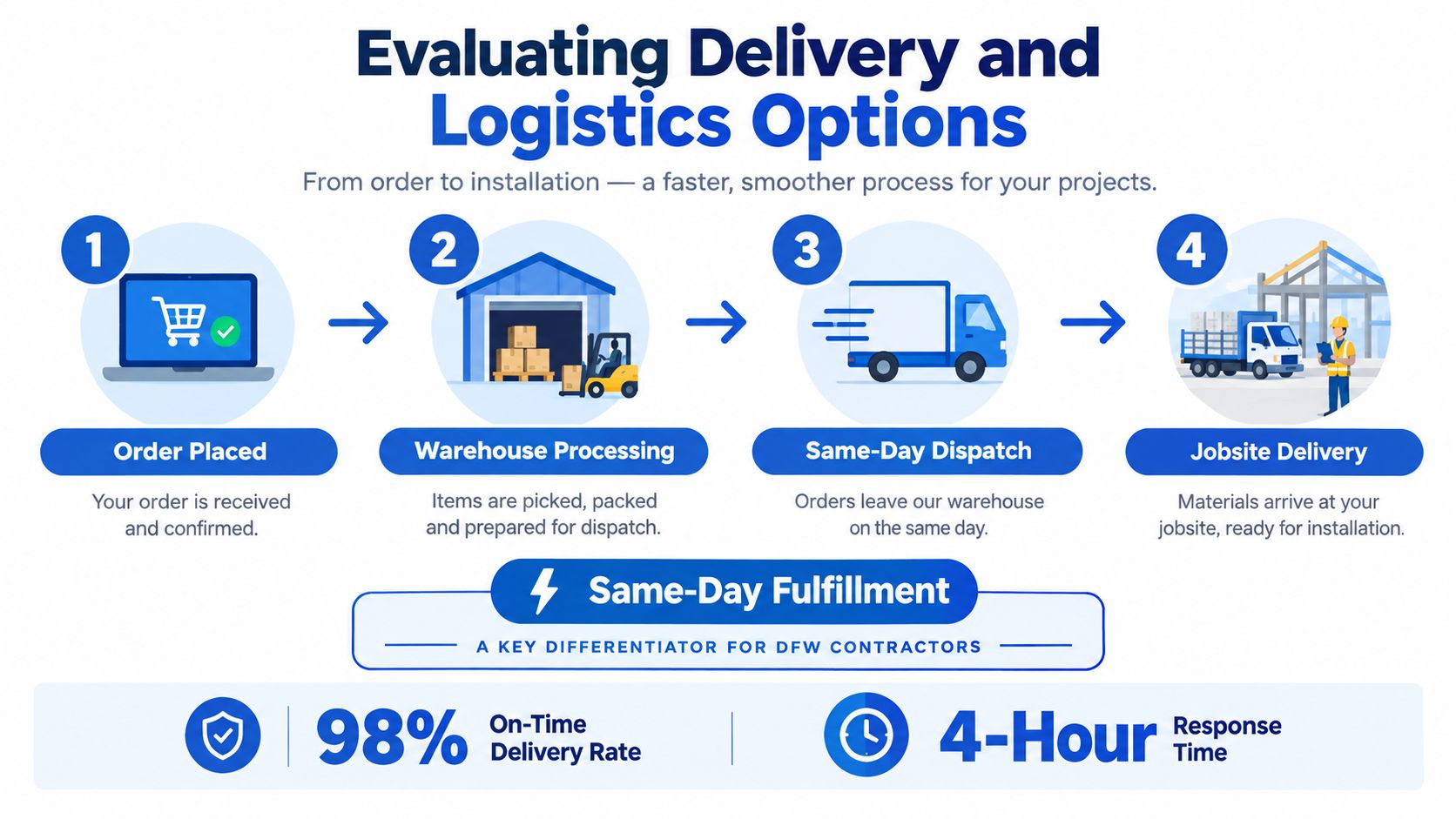
The cleanest supply yard in DFW can still waste your day if dispatch is sloppy. Contractors need more than inventory, they need reliable movement, clear timing, and someone who understands jobsite sequencing. A missed drop in Hurst or Euless can hold up the whole exterior package, even if the material was technically “in stock.”
Compare pickup, delivery, and dispatch discipline
Will-call pickup works for short runs when a crew has a trailer and the schedule is flexible. Jobsite delivery is what keeps production moving on full loads, especially when the order includes gutter sections, downspouts, trim, and related exterior materials. A supplier that offers both gives contractors options, but the value comes from how accurately they execute the drop.
Forest Hill is a strong geographic anchor for this kind of service because it sits at the intersection of Interstate 20/820 and State Highway 496, about eight miles southeast of Fort Worth in south-central Tarrant County (Forest Hill location). From a dispatcher's point of view, that makes route planning across Fort Worth, Arlington, and the nearby Tarrant County cities much more practical than a yard buried deep in the wrong side of the metro.
What to ask before you commit
A contractor should press for specifics, not promises.
- Ask about the drop window: if they can't narrow the timing, your crew ends up waiting.
- Confirm cut-to-length handling: standard lengths are fine until a jobsite needs a cleaner fit.
- Check account support: trade pricing matters, but so does a real person who can fix a loading mistake.
- Verify delivery radius: don't assume a Fort Worth yard automatically serves every job in the metroplex.
For a Fort Worth-focused delivery area reference, the service map at Blue Lake Roofing Supply's Fort Worth delivery page shows how a contractor yard can support nearby jobs with less friction than a retail-only outlet.
Real-World Supplier Performance in Action
The difference between a decent supplier and a production partner shows up when the job starts slipping. A crew gets to site, finds a missing section, and suddenly the lead installer is making calls while the homeowner watches the clock. The right distributor fixes that with direct dispatch, fast communication, and material that's ready to go.
One common setup is a Forest Hill-based yard supporting a roofing crew in the Fort Worth side of DFW with same-day fulfillment, then following up with a dedicated dispatch contact so the drop lands where the foreman expects it. That matters when the material needs to line up with a roof tear-off, siding tie-in, or a window package already scheduled for the same week. A distributor that also handles cut-to-length fabrication reduces errors before the truck ever leaves the yard.
The same operational discipline helps on repair work. If a leak call turns into a larger exterior scope, a contractor can keep the project moving instead of splitting the order across multiple vendors and hoping the parts match. That's where trade accounts and project billing alignment become more than office language, they keep cash flow and production from fighting each other.
A practical supplier conversation should sound like this, not like a retail sales floor. “What's the exact drop time, who signs for it, and what happens if the jobsite changes before the truck arrives?” If the yard can answer those questions cleanly, you're probably talking to the right place.
A contractor-focused support page, such as Blue Lake Roofing Supply's contractor tips category, is useful when you want to see whether a supplier understands field sequencing or just sells boxes.
Building Your DFW Supplier Checklist
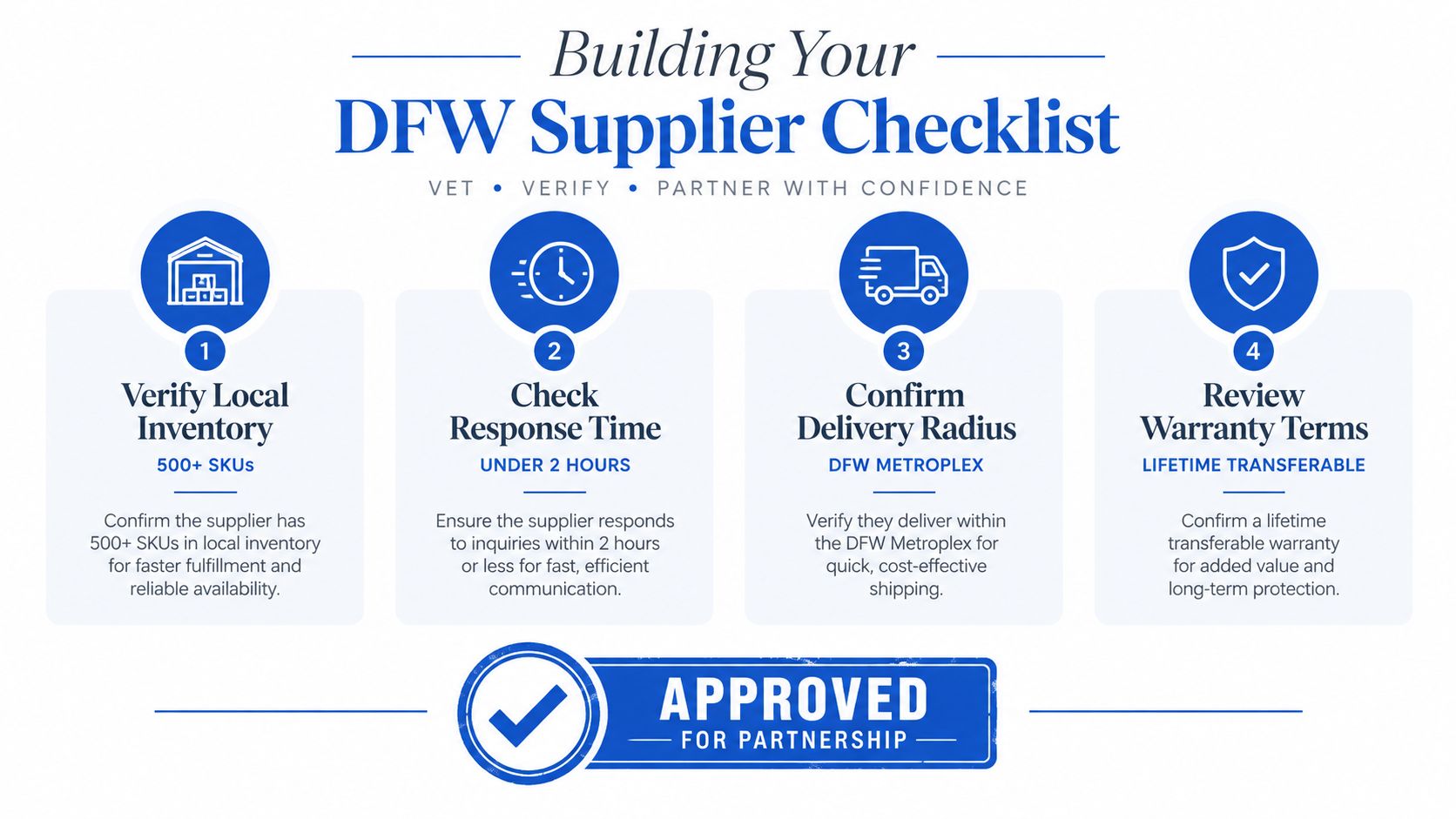
The search phrase guttering suppliers near me should turn into a checklist, not a guess. In DFW, the right choice is usually the supplier that can keep a crew moving, protect margin, and support the full exterior scope without forcing you to juggle three separate vendors. That means looking past proximity and judging the yard on execution.
The questions that actually matter
Use a supplier the same way you'd vet a subcontractor, by checking whether they can do the job without excuses.
- Verify local inventory: make sure the yard stocks the sizes, colors, and accessories you use most.
- Check response time: if the counter or dispatcher drags their feet, the job will too.
- Confirm delivery radius: a Fort Worth promise means nothing if your site is in Arlington or Hurst and they won't serve it.
- Review trade terms: contractor pricing, flexible payment, and account support matter on multi-phase work.
- Ask about installer-grade standards: you want material that fits pro work, not a stripped-down retail assortment.
- Look for one-source convenience: roofing, siding, windows, doors, lumber, and gutter components from one place simplify procurement.
A supplier like Blue Lake Roofing Supply fits this model because it serves DFW contractors from Forest Hill with jobsite-direct delivery, trade accounts, and installer-grade material lines, including roofing, siding, windows, doors, lumber, and related supplies. That matters when you're trying to keep a roofing crew, an exterior crew, and a repair crew on one schedule without chasing parts across town.
Bottom line: the right supplier makes your schedule easier to defend.
If you're sourcing materials across Fort Worth, Arlington, Grapevine, Euless, Hurst, North Richland Hills, Keller, or Mansfield, stop treating gutters like an afterthought and start treating them like a logistics problem. Visit Blue Lake Roofing Supply to see how a Forest Hill contractor yard can support your next DFW job with local inventory, trade pricing, and jobsite delivery.