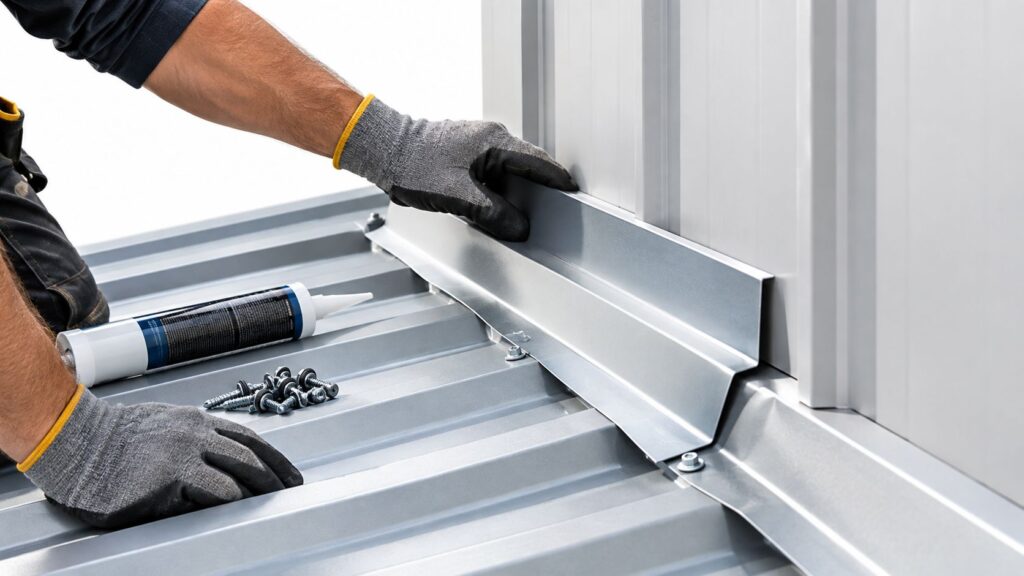
A Fort Worth replacement crew can arrive ready to strip a roof and still lose production because the flashing is missing, the underlayment doesn't match the specification, or the delivery window was never confirmed. The shingles may have been the lowest-priced line on the quote, but a return trip, idle labor, and a delayed schedule can erase that saving quickly.
Choose a roofing supply store as you'd choose a production partner, not just a place to buy materials. For contractors working in Fort Worth, Arlington, Grapevine, Forest Hill, and nearby Tarrant County communities, the right supplier helps coordinate inventory, delivery, account terms, and product documentation around the actual job.
Table of Contents
- Why Supplier Choice Matters on a DFW Jobsite
- What a Roofing Supply Store Should Solve
- Audit Inventory Depth and System Compatibility
- Compare Delivery and Will-Call Options
- Review Trade Terms and Material-Cost Control
- Verify Warranties and Compliance Records
- Apply the Framework to a DFW Project
- Choose Blue Lake Roofing Supply for DFW Projects
Why Supplier Choice Matters on a DFW Jobsite
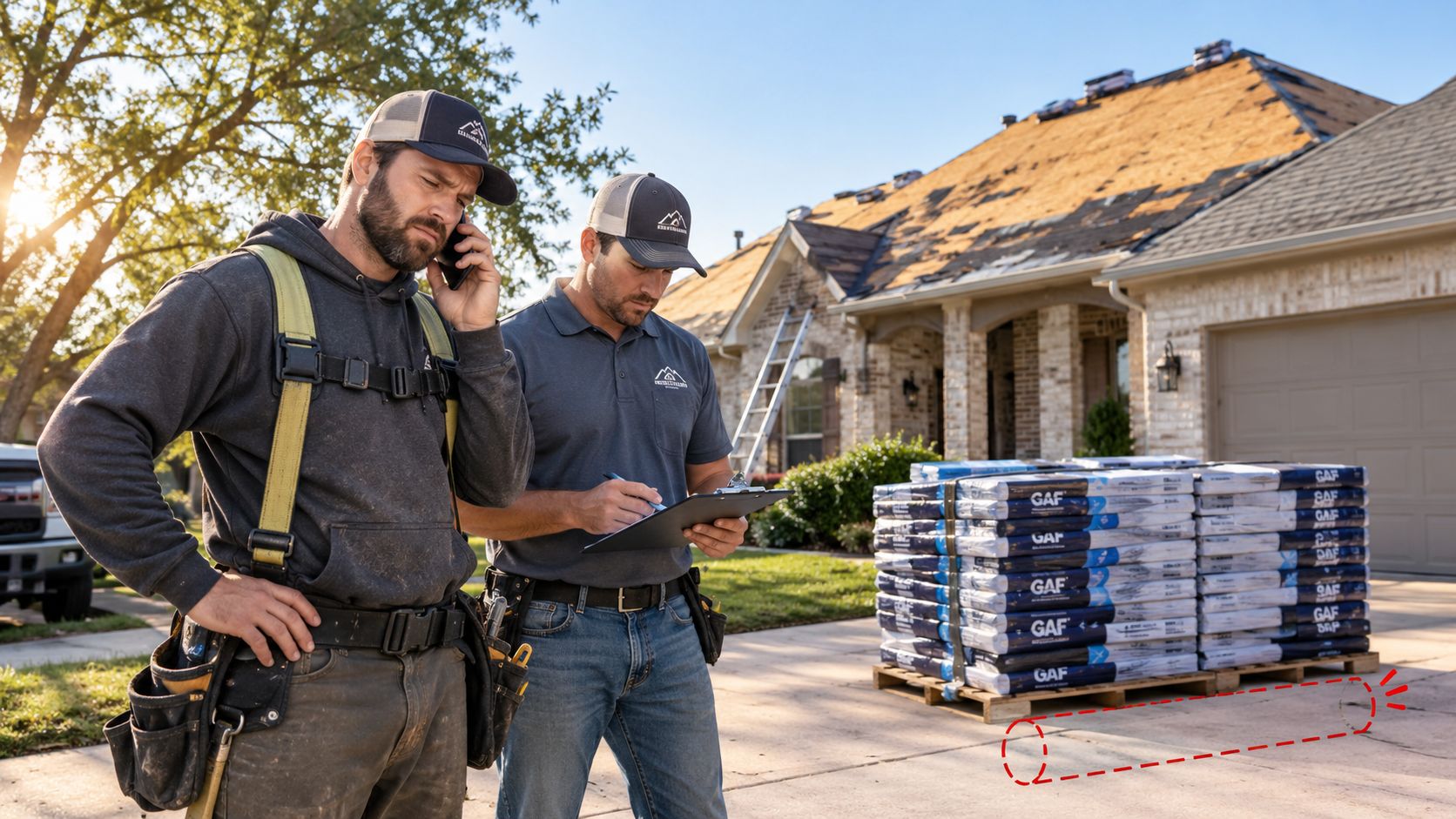
A Fort Worth crew is scheduled to replace a roof, but the accessory package hasn't been confirmed. The shingles are on the truck, while the compatible starter strip and flashing are still being located. The crew waits, the project schedule slips, and the contractor has to decide whether to send someone across town or risk using an unapproved substitute.
That's not just a product problem. It's a production problem. A roofing supply store can affect crew time, material coordination, margin, and the contractor's ability to keep a commitment to the customer. If the supplier treats an order as a list of line items rather than a complete job package, the contractor inherits the coordination work.
DFW contractors face a wide mix of work across residential replacements, new construction, multifamily properties, and commercial buildings. Fort Worth lists residential and commercial permits for new construction, additions, and remodels, while its online permit tools help contractors review permitted activity around the city and nearby areas such as Arlington and Grapevine (Fort Worth permit information). That makes local readiness relevant whether you're staging a shingle replacement or planning a larger exterior package.
Start your supplier evaluation with four lenses:
- Inventory depth: Is the specified product on hand, with its compatible components?
- Delivery: Can the supplier meet the job's timing and access requirements?
- Trade terms: Do pricing, payment timing, and order releases suit your project cash flow?
- Warranty handling: Can you get product records and clear support if an issue arises?
A useful supplier earns its place by reducing uncertainty across those areas. Don't decide based on a catalog or a single price line. Ask how the supplier will help your crew get the right materials to the right jobsite, ready for the work planned.
What a Roofing Supply Store Should Solve
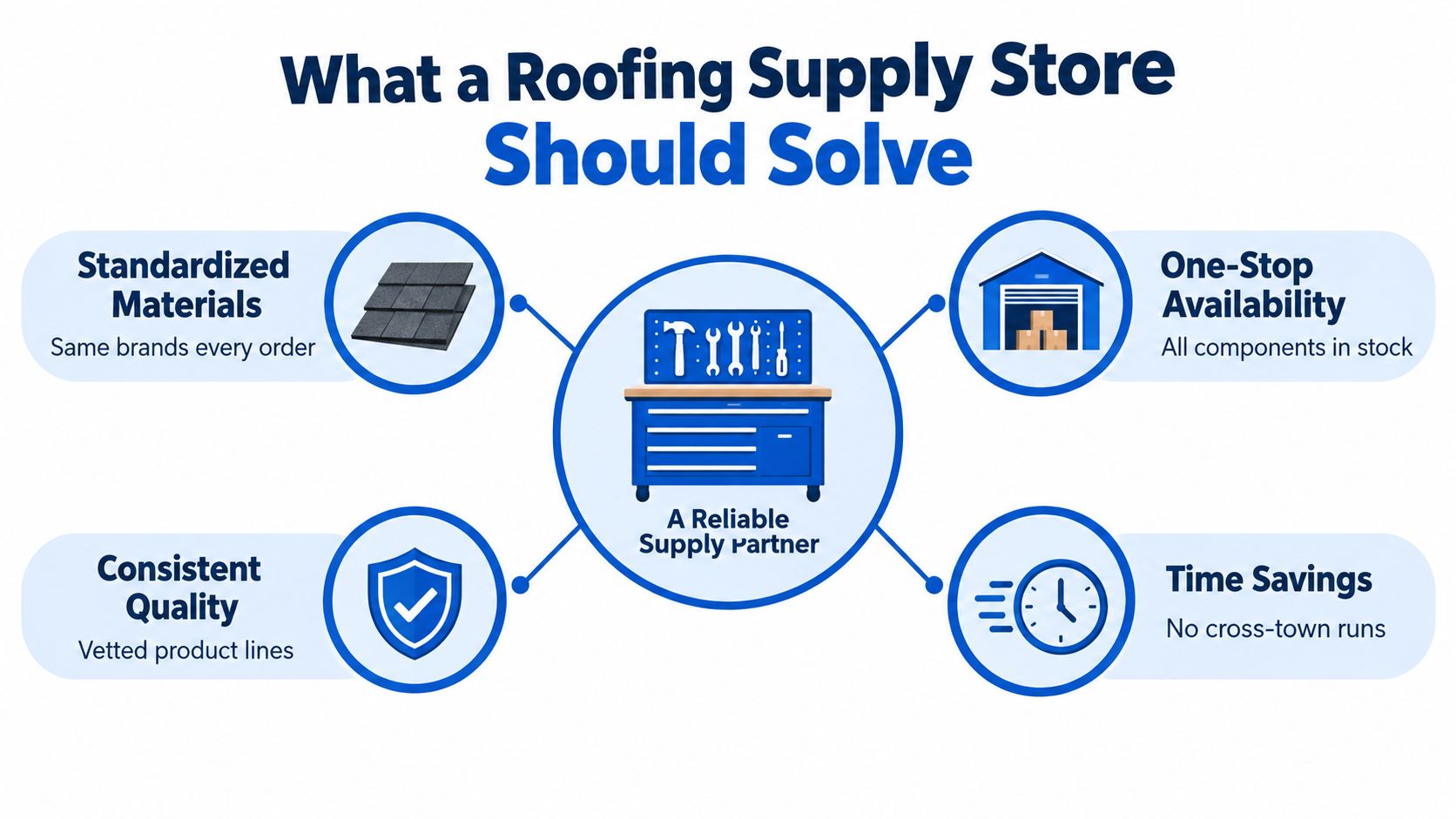
Treat a roofing supply store like a reliable tool bench for your crew. You shouldn't need to send a runner across town for every missing part or call several vendors to assemble one complete roof package. The supplier's job is to make sourcing simpler without weakening the specification.
A roof order is a coordinated system. Shingles need compatible underlayment, starter, ridge cap, flashing, fasteners, and ventilation components. Commercial assemblies have their own dependencies: a membrane, insulation, cover board, adhesives or fasteners, and flashing details must work together. If one part is substituted without checking compatibility, the contractor may face installation delays or warranty questions.
Source the whole scope, not just the main product
Many DFW contractors also coordinate siding, windows, doors, lumber, sheathing, and trim. Sourcing these materials through a coordinated process can make the order easier to stage and track, especially when the roof is only one part of a renovation. The important question isn't whether a product appears in an online catalog. It's whether the supplier can confirm availability, specifications, documentation, and delivery for the project as a whole.
Your procurement chain includes more than buying. It begins with the takeoff and product specification, continues through availability checks and payment arrangements, then ends with receiving, installation, and retained records. A supplier that handles those handoffs clearly can reduce avoidable calls and last-minute decisions.
Practical rule: Ask the supplier to confirm the complete assembly and the delivery plan in writing, not just the primary material and total price.
That distinction matters because low product price and low project cost aren't the same thing. A lower-priced line can become the expensive choice if it arrives late, lacks matching accessories, or creates extra work to verify the specification. Evaluate the supplier by how well it connects product, logistics, payment, and documentation into one workable order.
Audit Inventory Depth and System Compatibility
A long product list doesn't prove that a supplier has usable stock. Audit inventory against the project specification, then test whether the key components are available together.
Run the order through these checks
Start with the specification. Identify the required product, profile, dimensions, color, performance details, and approved manufacturer. A brand preference is not a substitute for confirming what the project documents call for.
Separate stock from special order. Ask which items are physically available for the required schedule and which need to be ordered. Confirm quantities, not just product names. “We carry it” can mean a small amount on a shelf, a warehouse transfer, or a supplier order.
Check compatibility. For an asphalt shingle roof, confirm underlayment, flashing, fasteners, starter, ridge cap, and ventilation components. For tile, metal, or standing seam, ask about the matching trim, clips, fasteners, and flashing details. For low-slope work, verify the proposed TPO, EPDM, or coating assembly alongside insulation, cover board, and attachment components.
Ask for supporting documentation. Request product labels and technical information for items where the specification, installation, inspection, or warranty depends on them.
Extend the audit beyond roofing
For exterior packages, check fiber cement, vinyl, or engineered-wood siding alongside trim and soffit. Confirm the window and door lines, framing lumber, sheathing, and fasteners needed for the same phase of work. A partial package can still leave the contractor coordinating several vendors and deliveries.
Use the supplier's brands and stocked product lines as a starting point, then confirm current quantities and project compatibility directly. The catalog helps you identify what to ask about; it doesn't confirm what will be ready when your crew needs it.
A proper inventory check ends with three clear answers: what's available, what works with the specified system, and what documentation will accompany the order. If one answer is uncertain, resolve it before scheduling the drop.
Compare Delivery and Will-Call Options
Delivery is a production decision. A truck arriving outside the useful window can block access, disrupt a crew's sequence, or leave materials exposed in the wrong place. Treat the delivery window as a promise to the crew, and define what “on time” means before you compare suppliers.
| Option | Best fit | Confirm before ordering |
|---|---|---|
| Jobsite-direct delivery | Larger orders or crews that need materials staged at the work location | Arrival window, drop placement, access needs, and update process |
| Will-call pickup | Smaller orders, urgent gaps, or jobs with suitable pickup capacity | Order readiness, loading process, and who will collect the materials |
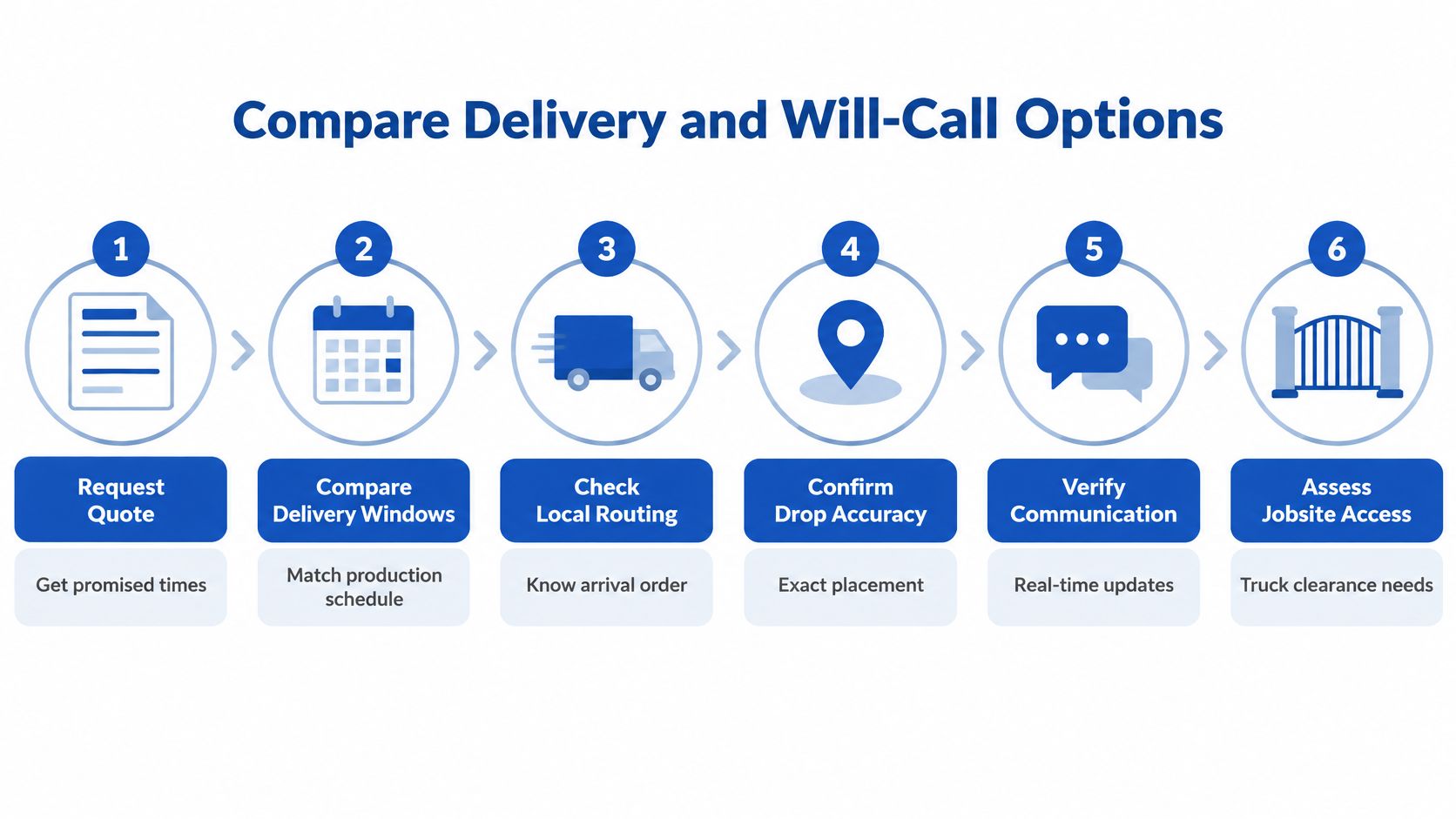
For contractors moving between Forest Hill, Fort Worth, Arlington, and other DFW locations, ask how the supplier routes local deliveries and whether the order can be dropped in the sequence your crew will install it. Discuss partial shipments, receiving responsibilities, site access, and what happens if a truck is delayed. Confirm whether the driver needs a clear staging area or specific placement instructions.
Blue Lake Roofing Supply provides jobsite-direct delivery across the DFW Metroplex within an approximately 40-mile radius, offers same-day fulfillment on orders placed by 12:00 PM, and has will-call pickup at its Forest Hill yard (Blue Lake delivery coverage). Confirm availability for your address and order rather than assuming every route or item follows the same schedule.
A supplier's answer should be specific enough to plan around. “We deliver locally” doesn't tell you whether the truck will arrive before tear-off, whether the load can reach the designated drop point, or who will call if the route changes. Match those details to the job's installation sequence.
For a visual overview of common delivery-planning steps, use this video as a prompt for questions to discuss with your supplier:
Review Trade Terms and Material-Cost Control
The lowest unit price isn't automatically the lowest project cost. A contractor buying materials for a production line has to manage not only price, but also cash timing, order accuracy, substitutions, and the risk of a return trip.
A 2025 survey of 1,020 roofing and exterior-trade owners and executives found that 64% identified rising material prices as a major risk, while 58% cited labor shortages, 53% labor and overhead costs, and 27% access to working capital (survey findings on contractor business risks). That pressure makes procurement controls more useful than chasing a low number on one product line.
Negotiate the whole order
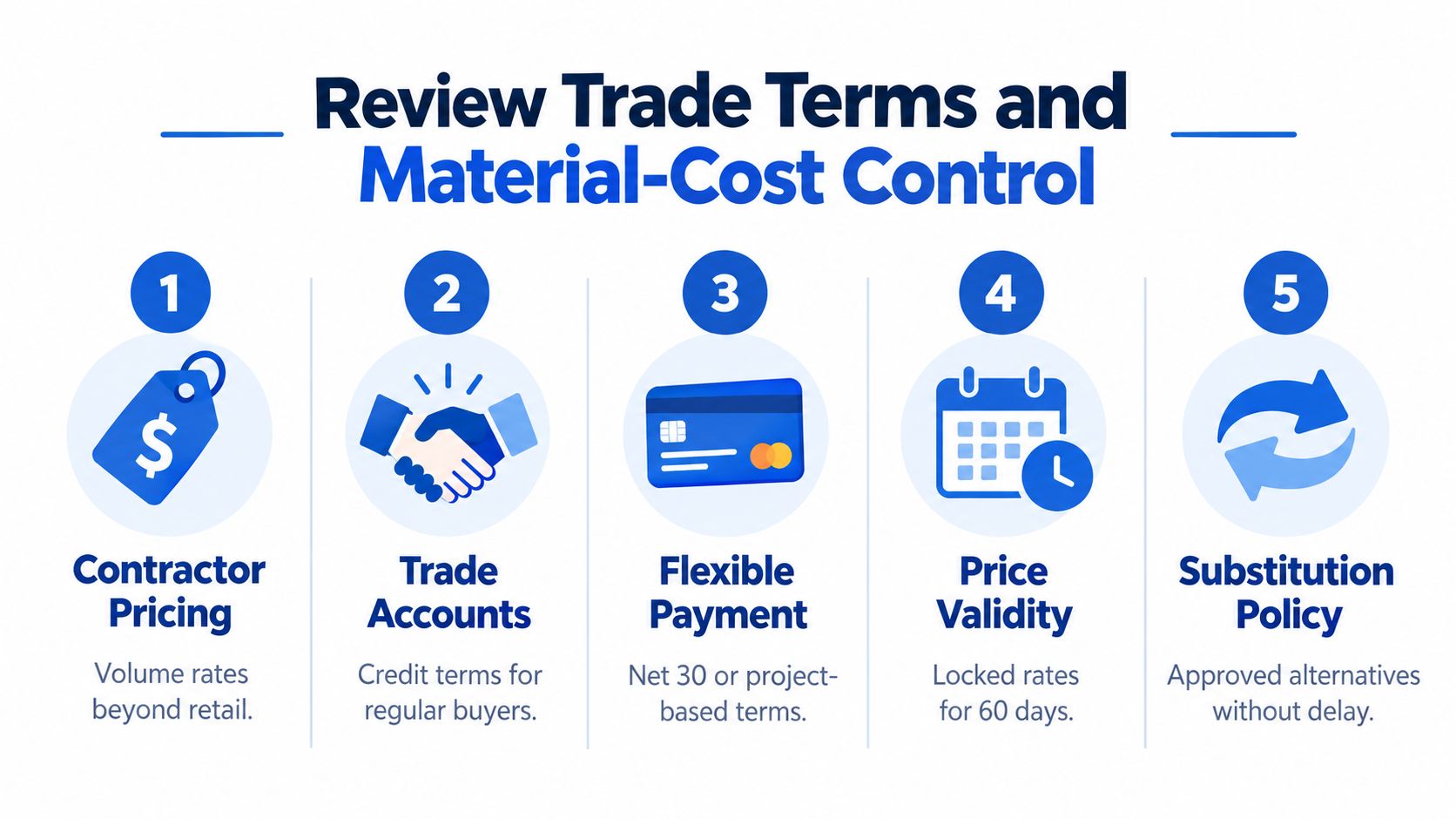
Ask whether contractor pricing applies to the full package or only selected products. Clarify account terms, payment timing, price validity, and whether the supplier can release materials in phases for a multi-stage job. If the project needs an approved substitution, get the alternative's specification and price confirmed before the original item becomes unavailable.
Bulk or military pricing may be relevant for eligible buyers, but the practical test remains the same: compare equivalent products and account for delivery, accessories, and project timing. Don't treat a discount as valuable until you know what it applies to and how it affects the complete order.
An account representative can help confirm takeoff quantities, accessory completeness, credits, and delivery records. Use that support to check assumptions before loading, not to reconstruct the order after a shortage appears. For multi-phase work, align releases with the job schedule so you don't tie up cash in unneeded stock or leave the next phase exposed to an unconfirmed price.
A useful quote answers four questions: what you're buying, what it costs, how long the price holds, and what happens if the specified item can't be supplied.
Review those terms alongside your project's billing milestones. A supplier that understands the timing of your purchases can help you manage exposure more deliberately, but the contractor should still record approvals and confirm every release. The target isn't the lowest visible line. It's a dependable material plan that protects margin without creating unnecessary inventory or delay.
Verify Warranties and Compliance Records
A product's manufacturer, installation instructions, and warranty terms matter after the truck leaves. Before accepting materials, confirm that the delivered line matches the approved specification and that you can retain the records needed to support installation, inspection, or a future claim.
Confirm records before work begins
For each assembly, ask for the manufacturer's product information and applicable installation instructions. Check that labels and order records identify what arrived, and confirm how the supplier handles questions about a product defect, missing documentation, or warranty assistance. The supplier provides documented products and purchasing records; the contractor remains responsible for installation that follows the applicable system requirements.
Commercial insulation is a clear example of why a generic order description isn't enough. The applicable R-value can depend on climate zone, occupancy classification, and assembly design. Under the 2024 IECC, insulation entirely above the roof deck is listed at approximately R-33ci for climate zones 4 and 5, while applicable assemblies in climate zones 6 and 7 require higher values; tapered systems can demonstrate compliance using rated R-value per inch multiplied by average thickness (2024 IECC commercial energy-efficiency provisions). Confirm the governing requirements and approved assembly for the specific project.
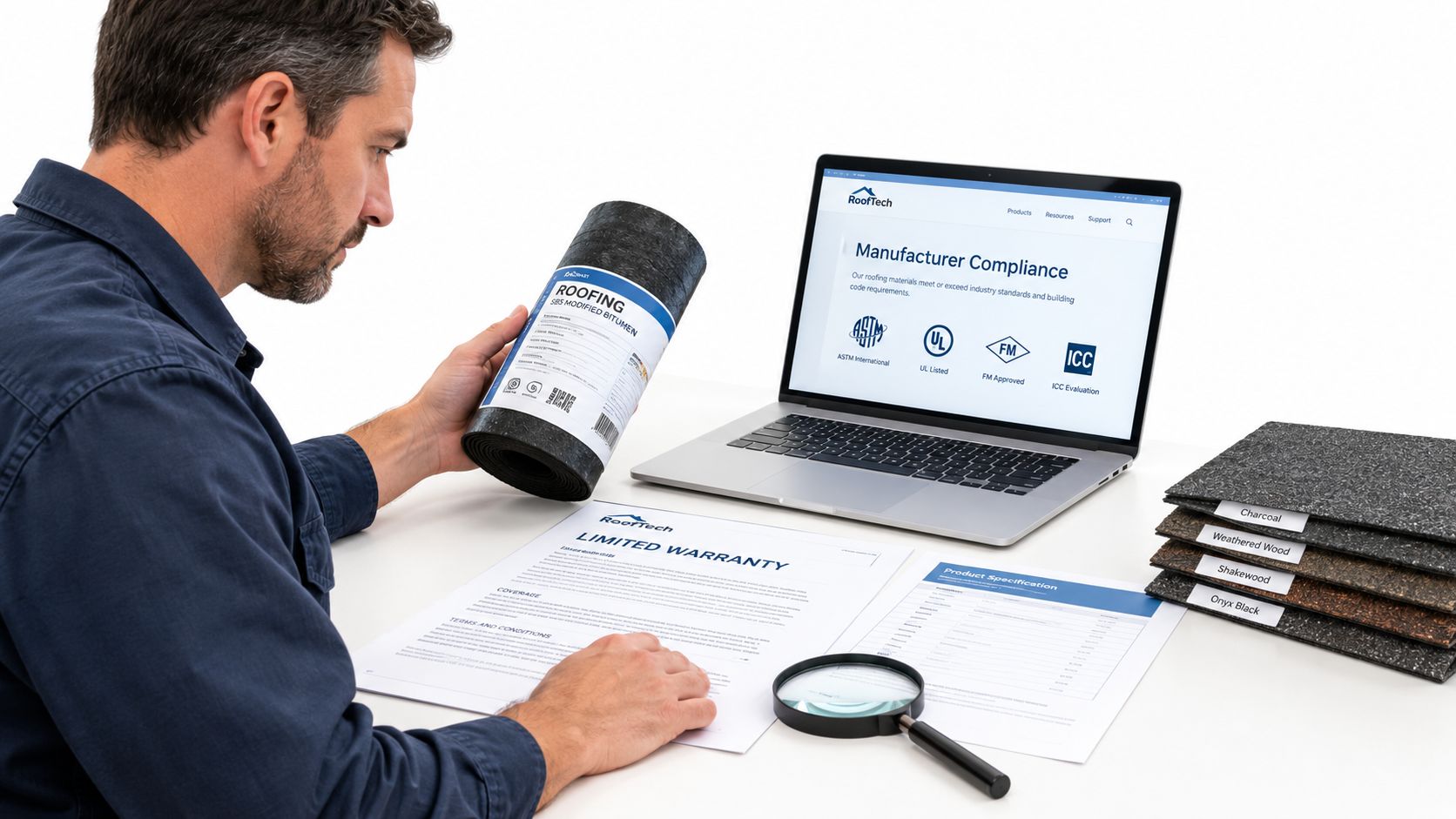
A board count alone doesn't establish that the assembly meets its target. Capture board type, thickness, facer, compressive strength, tapered layout, average thickness, fastening compatibility, and membrane manufacturer approval. Keep labels and product documentation with the job records so the installed assembly can be verified if an inspector asks.
For residential orders, check the specified shingle and its matching components, including the asphalt shingle underlayment options. Keep purchase and delivery records together before installation begins, especially on permitted projects in Fort Worth and nearby jurisdictions. Clear records won't replace correct installation, but they make it easier to show what was supplied and resolve questions with the manufacturer or supplier.
Apply the Framework to a DFW Project
Consider a Fort Worth-area renovation that includes asphalt shingles, underlayment, flashing, siding, replacement windows, and framing lumber. The contractor shouldn't send one vague request for a “roof and exterior package.” The supplier needs a clear scope, the selected products, quantities, required delivery sequence, and any constraints at the property.
The first quote should distinguish stocked items from anything that needs to be ordered. The contractor then checks that the shingles and accessories match the specification, that siding trim and soffit are coordinated, and that the window and lumber quantities cover the planned phase. Before confirming delivery, the contractor identifies where roofing materials should be dropped, who will receive the load, and whether siding or windows should arrive separately to protect the work sequence.
The payment conversation belongs in the same planning process. If work is staged, agree on which materials will be purchased now and which will be released later. Confirm pricing and any substitution approval for each release rather than assuming the first quote covers every future shipment.
A commercial low-slope project needs a different kind of coordination. For a Fort Worth-area building, the contractor may need TPO or another membrane, insulation, flashing, and an assembly with documented specifications. The supplier should have enough information to quote compatible components and provide product records; the contractor and project team still need to verify the final design against project requirements.
Solar reflectance can also be a procurement consideration on air-conditioned buildings. An EPA-reviewed study reported that increasing roof solar reflectance reduced cooling loads by 18–93% and peak cooling demand by 11–27%, with results varying by building and climate (EPA-reviewed cool-roof study). Treat those ranges as context, not a project guarantee. Confirm the specified product and relevant performance documentation before comparing quotes.
The practical result is a better request for quotation: defined scope, compatible components, availability, records, payment timing, and a delivery plan tied to the work.
Choose Blue Lake Roofing Supply for DFW Projects
A supplier earns a place on your bid list when its inventory and service model fit the project. Proximity by itself solves nothing. Blue Lake Roofing Supply serves professional contractors across the DFW Metroplex from its Forest Hill yard, with residential and commercial roofing products, standing-seam packages, siding, windows, doors, and lumber listed among its offerings (see Blue Lake Roofing Supply's published product and service information).
Before placing an order, confirm the details that decide whether the supplier fits your job:
- Scope: Check current availability for the specified roofing system, exterior materials, and compatible accessories. A missed accessory line item can idle a crew while someone drives to pick it up.
- Delivery: Verify whether jobsite-direct delivery can reach your location and match the crew's schedule, or whether will-call pickup from Forest Hill is more practical.
- Terms: Ask how trade-account pricing and flexible payment terms apply to your order and project phases.
- Documentation: Request product records and confirm the manufacturer's warranty coverage for the selected shingle line.
- Total cost: Compare the complete package, delivery, timing, and likely coordination work, not just a single unit price.
Blue Lake reports jobsite-direct delivery within an approximately 40-mile radius and same-day fulfillment for orders placed by 12:00 PM, subject to confirming current order and route availability. Its service information also describes trade-account pricing, flexible payment terms, and shingle lines with approximately 25- to 30-year manufacturer warranties. Treat each of those claims as a checkpoint: a substitution made without approval, a late drop, or warranty friction at claim time turns a low quote into an expensive order. Confirm the specific product, warranty language, pricing, and documentation directly before relying on them for a project.
For a roofing replacement in Arlington, a mixed exterior renovation in Grapevine, or commercial work around Fort Worth, make the decision by project type and schedule. Choose the supplier that can meet the specification, document the materials, coordinate the drop, and offer terms that work with your cash flow. The right roofing supply store is the one that lowers your total project cost without pushing avoidable risk onto your crew.
Blue Lake Roofing Supply offers roofing, siding, windows, doors, lumber, trade accounts, and DFW jobsite delivery from its Forest Hill yard. Share your project scope and delivery needs, then visit Blue Lake Roofing Supply to confirm current inventory, pricing, and service availability.