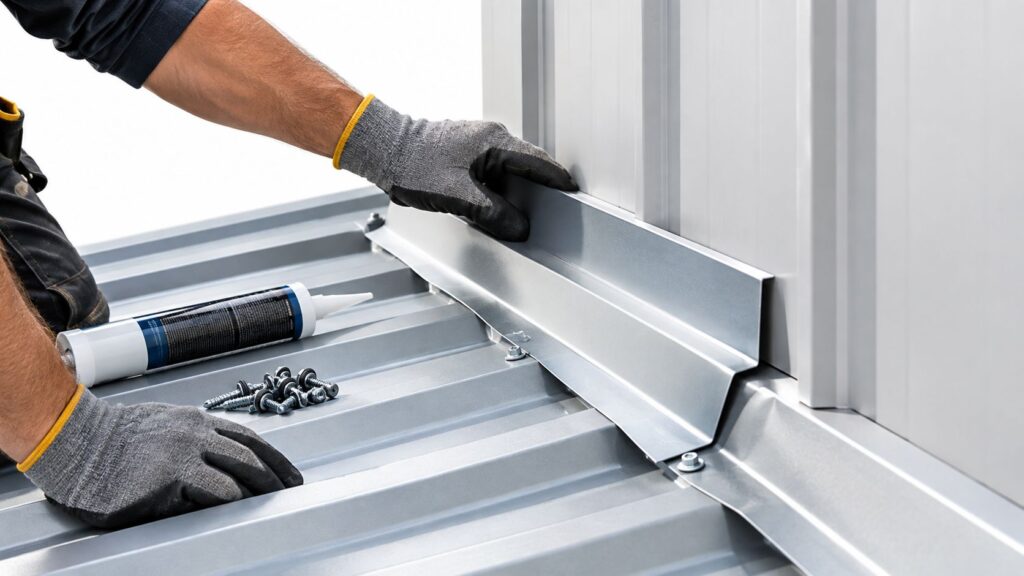
The phone call usually sounds the same. A homeowner in Fort Worth wants the painted-wood look back on a tired elevation in Benbrook or White Settlement, but they're done with scraping, priming, and repainting every few years. On paper, fiber cement siding that looks like wood solves that appearance problem fast, but on the jobsite it only works when the detailing is right, especially around flashing, clearances, and finish choice.
That's where a lot of callbacks start. The plank looks sharp on delivery day, the street view is clean, and then wind-driven rain finds a weak window head, a blocked drainage path, or a fastener that was driven too tight. In Dallas, Arlington, Mansfield, Keller, Forest Hill, and the rest of Tarrant County, the look sells the job, but the wall only stays right if the assembly behind it is treated like a drained exterior, not a cosmetic skin.
Table of Contents
- Why Fiber Cement Siding That Looks Like Wood Matters for DFW Contractors
- How Fiber Cement Mimics Wood and Why the Market Shifted
- Factory Finishes, Wood-Grain Textures, and Paint Systems Explained
- Profiles, Textures, and Panel Formats That Replicate Wood Siding
- Moisture Management and Flashing Details for DFW Climates
- Permitting, Thickness Rules, and Code Compliance in Tarrant County
- Choosing a Local Supplier and Avoiding Common Callback Traps
- Frequently Asked Questions for DFW Contractors
Why Fiber Cement Siding That Looks Like Wood Matters for DFW Contractors
A common Fort Worth replacement starts with a simple request. The homeowner likes the warmth of painted wood, but they don't want a crew back every season scraping soft boards on the south side of the house. Fiber-cement siding that looks like wood gives that familiar lap-siding profile without depending on natural wood for the face of the wall, and that changes the maintenance conversation from constant touchups to a more controlled coating and detailing plan.
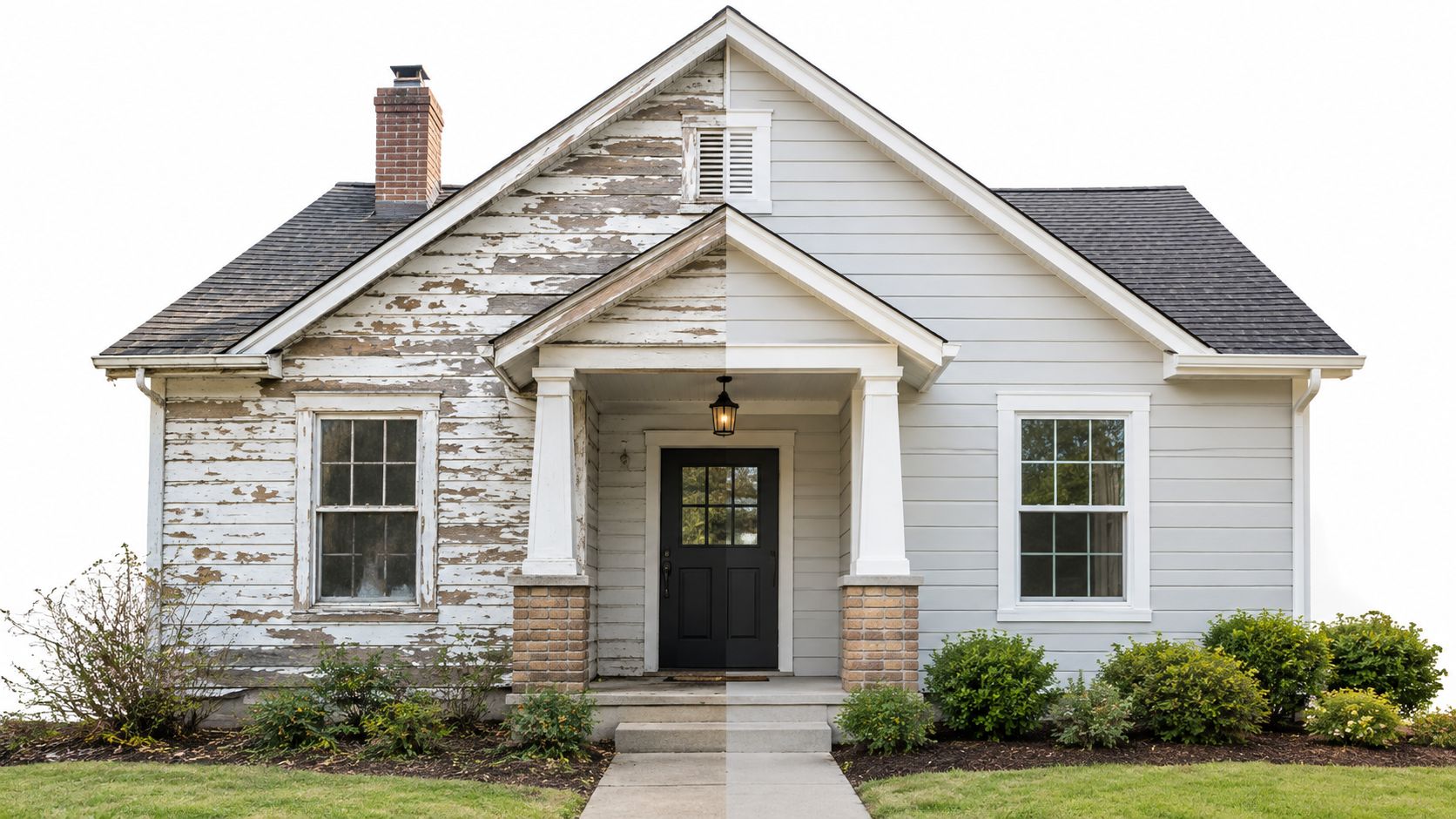
What homeowners think they're buying
Most owners are buying the look first. They want the horizontal shadow lines, the painted trim relationship, and the traditional proportions that read well on older homes in Fort Worth, Arlington, and Mansfield. Fiber cement delivers that visual language while shifting the substrate to a cementitious product with different failure modes than wood.
That's useful, but it also creates a trap. If the crew treats it like trim material instead of a wall system, the job can look great and still come back with moisture issues, paint failures, or inspection problems. A plank that resembles cedar still needs correct gaps, flashing, and coating strategy.
Practical rule: A siding upgrade is only as good as the weakest opening detail on the wall.
Why the install method matters as much as the profile
On DFW remodels, the trouble usually shows up at transitions, not in the middle of the wall. Roof-to-wall intersections, window heads, kick-out points, and bottom edges are where poor planning turns a clean exterior into a repair call. That's why the material choice has to be paired with the right installation sequence and the right crew habits.
The contractor's real job is to match the appearance target with the wall's performance needs. That means specifying the finish, confirming how the product will be painted or prefinished, and checking that the wall can drain and dry. When those pieces line up, the house keeps the wood look without behaving like fragile wood siding.
How Fiber Cement Mimics Wood and Why the Market Shifted
A Fort Worth owner wants the cedar look, the clean lap lines, and the same curb appeal as painted wood, but without the constant wood repair cycle. Fiber cement earns that spot because it recreates what people see from the street, plank width, shadow depth, and grain direction, while using a cement-based substrate with different wear points than lumber. Its lineage goes back to the fiber-cement process patented in 1901 by Ludwig Hatschek under the name “Eternit,” and the modern asbestos-free versions arrived in the mid-1980s when cellulose or wood pulp replaced asbestos reinforcement reference overview.
Why the look reads as wood
Manufacturers get the wood effect by shaping planks and panels to match the horizontal rhythm of lap siding, then adding either a smooth face or a grain pattern that reads like painted cedar in daylight. On older homes in DFW, that matters because the eye catches profile, reveal, and shadow before it studies the material up close. Fiber cement can also be formed to resemble brick, stone, or smooth cement, but the wood-grain option usually fits traditional elevations best.
The market shift is easy to see in the numbers cited in the source material. U.S. Census Bureau Survey of Construction data shows fiber-cement siding rising from about 9% of new single-family homes in 2005 to 20% in 2018, while wood siding sat at about 5% in that 2018 data reference overview. That is a clear sign that contractors and builders stopped treating it as a specialty choice.
What the broader market says
Market estimates point the same way. One 2025 siding-market estimate put fiber cement at 26.8% of the material segment and wood siding at 14.2% fiber cement market report. Another 2025 estimate projected total global fiber-cement production at 39.59 million metric tons, with siding making up 35.11% of applications and residential construction accounting for 45.12% of demand. Those figures are market estimates, not jobsite guarantees, but they explain why the product shows up in more residential bids.
For contractors working in Arlington, Mansfield, Keller, and nearby North Texas neighborhoods, the practical takeaway is simple. Homeowners still want the wood look, and the market has already accepted a cementitious substitute that changes the maintenance load, the detailing requirements, and the inspection conversation.
Factory Finishes, Wood-Grain Textures, and Paint Systems Explained
The finish choice decides how convincing the siding looks from the curb and how much work the crew carries after install. A factory-finished plank can save time on site, a field-painted plank gives flexibility on color and touch-up strategy, and a wood-grain texture changes how authentic the wall reads in daylight. None of those options erase maintenance entirely, they just move it around.
Comparing the main finish routes
| Finish type | Appearance control | Maintenance impact | Jobsite flexibility |
|---|---|---|---|
| Factory-finished boards | Consistent color and sheen | Reduces early painting work, but still needs normal care | Fastest for clean scheduling |
| Field-painted boards | Highest color flexibility | Needs repainting over time | Easy to coordinate with trim and accent colors |
| Wood-grain textured boards | Strongest wood-like read on close inspection | Same basic care as the finish system used | Best when the goal is a cedar-style visual |
A factory finish helps when crews need speed and a tight color match across the elevation. Field painting helps when the design calls for a custom color palette or when trim and body colors need to be adjusted after framing is already complete. Wood-grain texture is a different decision, because it affects how the wall reads in raking light, especially on long front elevations in Fort Worth and Benbrook.
What doesn't work in the field
The mistake I still see is treating “factory finished” as if it means “maintenance free.” It doesn't. Field-painted material still needs an initial coating and later recoating, while factory finishes reduce the immediate painting burden but don't remove upkeep altogether maintenance discussion. The crew still has to protect cut edges, keep joints clean, and avoid contaminating the finish during install.
If you're pulling a siding package together for a job in Forest Hill or White Settlement, a distributor like Blue Lake Roofing Supply can help line up siding, trim, and accessory pieces so the finish system stays consistent across the order. That matters because mixed material batches and mismatched accessory choices create visual problems before the house even gets painted.
Profiles, Textures, and Panel Formats That Replicate Wood Siding
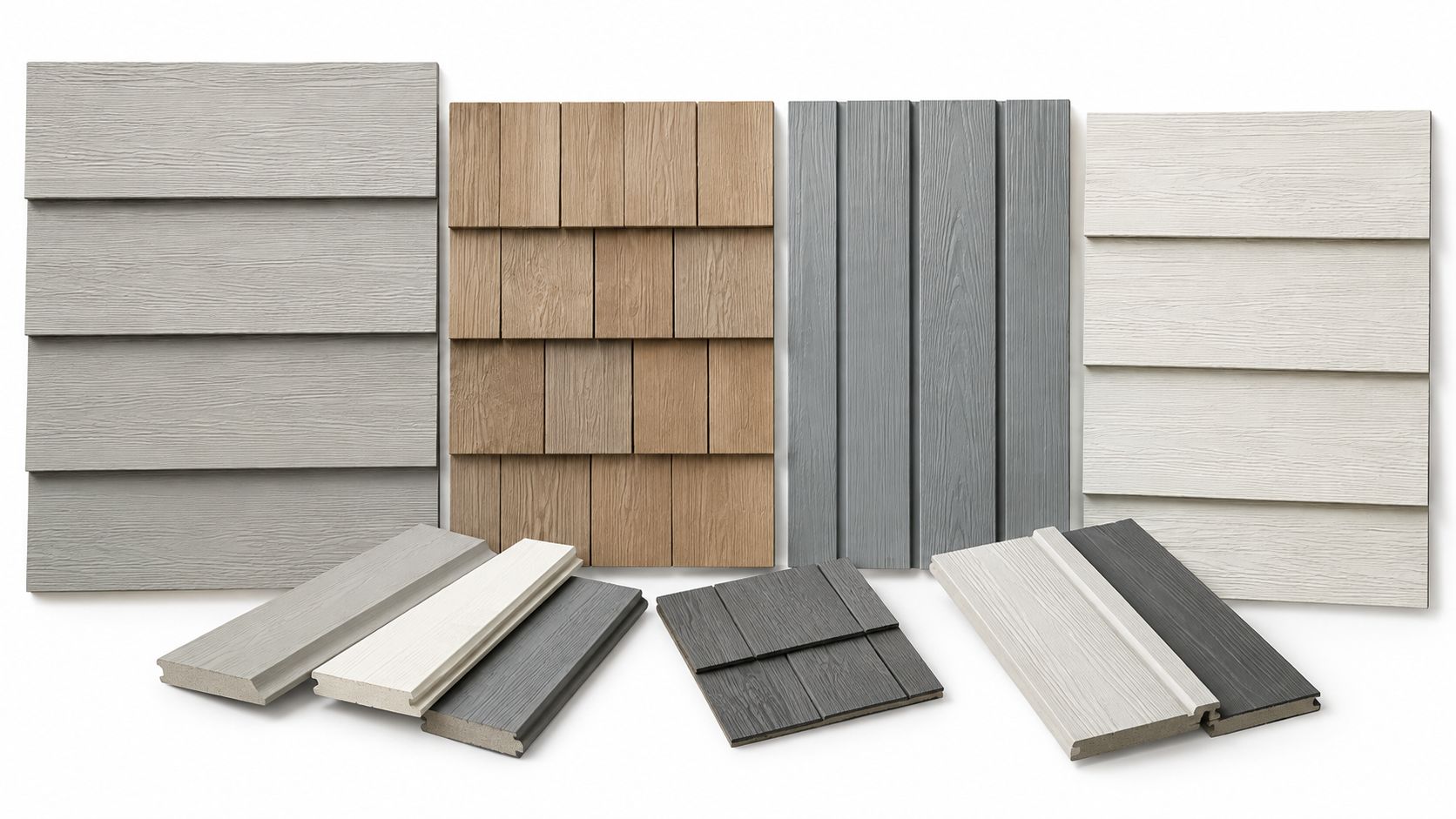
On a Fort Worth job, the wood look starts with the profile. Lap siding gives the familiar horizontal rhythm, shingle patterns fit cottage details and accent walls, and vertical panels create a stronger farmhouse or contemporary line. Texture then decides whether the wall reads as flat painted fiber cement or something closer to rustic cedar.
Match the profile to the elevation
A cedar-style home in Fort Worth usually needs a lap board with enough shadow line to read clearly from the street. Rustic additions, gables, and accent walls can use shingle patterns or staggered edges, especially where the owner wants more texture without going to real wood. Vertical panels fit projects that need sharper lines and a cleaner break in the facade.
Proportion matters because the wrong board width changes the whole elevation. Oversized boards flatten the front of the house, while shallow grooves disappear once paint and weathering settle in. The curb view should look deliberate, not crowded or thin.
Use the finish language that the wall can support
A public construction specification lists smooth, rough-sawn, and wood-grain textures as selectable finishes, and it identifies 48-inch-wide vertical panels with wood-grain texture and grooves spaced either 8 or 12 inches on center specification reference. The same specification also recognizes straight-edge and staggered-edge notched shingle patterns.
That gives contractors room to mimic cedar, rustic lap, or shingle detailing without switching to combustible solid wood. On homes in Arlington, Mansfield, Keller, and the communities around Fort Worth, the main decision is usually how much grain the owner wants to see from the driveway, and whether the profile matches the rest of the elevation.
The sample set matters too. A collection of various fiber cement siding samples featuring wood-like textures, colors, and different panel profiles helps crews compare how one profile reads next to another before the order goes in. That kind of side-by-side check catches mismatches early, before the wrong texture or panel format shows up on site and forces a callback.
Moisture Management and Flashing Details for DFW Climates
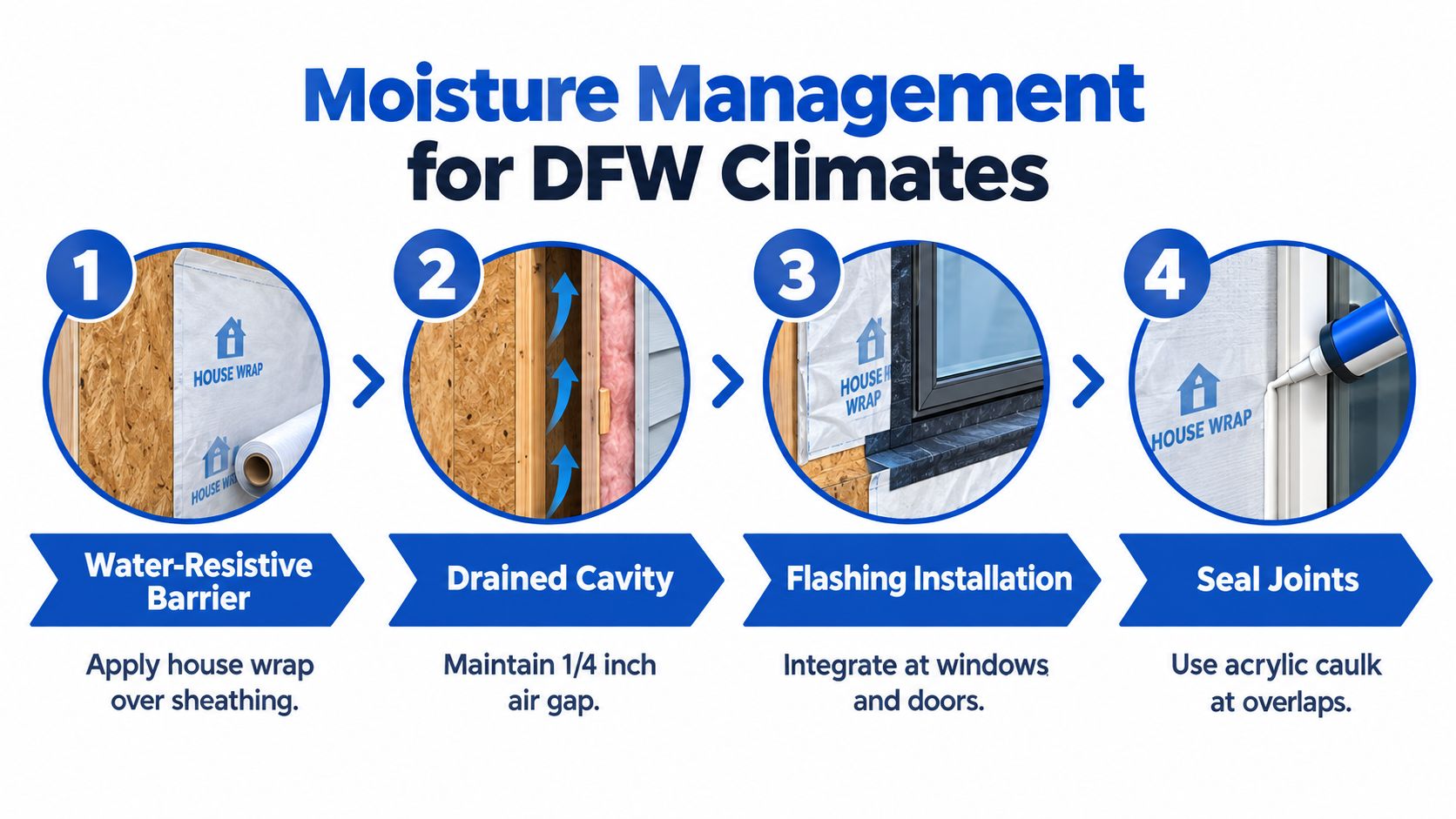
A clean siding install can still leak if the wall cannot drain. Fiber cement takes on and gives off moisture slowly, so the assembly needs to shed water in layers, not rely on the face of the board to stop everything. In North Texas, wind-driven rain and fast weather swings expose weak flashing fast.
Build the wall so it can drain
Start with a continuous water-resistive barrier over the sheathing, then tie in head flashing, sill flashing, and end dams at every opening and transition. Where the product allows it, a ventilated drainage cavity helps the wall dry. Installation guidance commonly calls for a cavity of roughly 3/16 to 3/4 inch, with about 3/8 inch or more giving better drainage and drying capacity installation guidance.
The same guidance notes that vertical furring supports gravity drainage, while screened openings at the bottom and top of the cavity help ventilation. That is the kind of detail that keeps a Fort Worth job from turning into a moisture callback two months later.
Do not bury the bottom course or block the exit path for water.
Avoid the mistakes that create callbacks
Fastener placement matters more than many owners expect. Overdriven nails, ignored edge distances, and blocked joints can lead to cracking, swelling, or trapped moisture even when the siding is new. On a remodel over existing material, the risk climbs because the wall can trap water if the crew does not account for clearances and drainage.
Roof-to-wall transitions need the first look. A wall can be straight, the paint can be clean, and the assembly can still fail if the flashing is not continuous at the intersection. For a practical reference, the roof flashing against a wall guide shows how a missed lap turns into a repair call.
Permitting, Thickness Rules, and Code Compliance in Tarrant County
A siding replacement in Fort Worth is a permit job, not just a material swap. The city's residential permit guidance says replacing missing or decayed siding requires a building permit, and inspection guidance requires approved plans and the permit card onsite before wall sheathing is covered Fort Worth code guidance. On a real job, that paperwork has to be ready before the crew closes the wall, or the inspection can stop cold.
What inspectors are looking at
Fort Worth inspectors are directed to check that the wall-panel cover material matches the grade and thickness shown on approved plans, and that fasteners follow code or approved details. Older code text also sets a minimum siding thickness of 3/8 inch unless the siding is installed over permitted sheathing, with some rustic, drop, or shiplap patterns needing an average thickness of at least 19/32 inch.
That means the submittal sheet, the order, and the stack on the trailer need to match. If the pallet shows up with the wrong thickness or profile, the inspection can go sideways even when the product itself is sound.
I have seen that turn into a wasted day in Tarrant County. The crew is ready, the walls are prepped, and the inspector still flags the job because the paperwork does not line up with the boards on site.
A clean pre-install sequence for Tarrant County jobs
- Confirm the permit early: Fort Worth replacement siding work needs the permit before the wall gets closed in.
- Check the product sheet: Match panel grade and thickness to the approved plan, not just the sales description.
- Verify fastening details: Make sure the crew knows the approved fastener pattern before the first board goes up.
- Stage the documents onsite: Keep the approved plans and permit card where the inspector can review them before cover-up.
- Coordinate nearby jurisdictions: Forest Hill, White Settlement, Benbrook, and the surrounding Tarrant County towns can follow their own process, so do not assume one city's sequence fits another.
Thickness is not the only trap. Fastener schedule, panel profile, and the permit packet all need to match the approved scope. If one piece is off, the wall may look finished, but the inspection still fails.
For crews working across Fort Worth and the surrounding suburbs, that is the difference between a smooth sign-off and a lost half-day. A good wall system still fails when the permit and thickness details were never confirmed before install.
Choosing a Local Supplier and Avoiding Common Callback Traps
The fastest way to lose money on fiber cement is to piece the job together from too many stops. When the siding, trim, soffit, fasteners, and flashing all come from different places, delivery windows slip and the crew starts improvising on site. That's when a “simple” exterior becomes a callback list.
What reduces downtime on DFW jobs
A local supplier with contractor pricing and jobsite delivery helps keep the install sequence moving, especially when you're coordinating in Fort Worth, Arlington, Mansfield, Keller, or the south Tarrant County corridor. Blue Lake Roofing Supply stocks siding lines that include fiber cement, along with related exterior materials, and it can support trade accounts and jobsite-direct delivery from Forest Hill for crews working the Metroplex Blue Lake Roofing Supply siding supply.
That matters because the hidden risk isn't just product shortage. It's the wrong assumption that a durable-looking product won't need a clear plan for cuts, dust control, staging, and finish protection. Fiber cement is heavier than vinyl, more labor-intensive to handle, and less forgiving when the crew rushes the details.
The cleanest siding order is the one that reaches the site with every accessory the installer needs, not just the boards.
What I watch before the truck leaves
Check the finish type, confirm the thickness, and make sure the trim package matches the wall layout. Then verify that the crew has enough material to maintain consistent reveals without raiding another part of the job. That's how you keep one elevation from looking like three different projects.
The other trap is maintenance confusion. Factory finish reduces painting work, field paint gives flexibility, and neither one excuses bad clearances or missing flashing. The product may look like wood, but the job only stays right when the sourcing and install plan are built around how the wall behaves.
Frequently Asked Questions for DFW Contractors
Is fiber cement siding really low maintenance
It takes less upkeep than painted wood, but it is not maintenance-free. The base material holds up better when moisture gets into the wall, yet the finish still needs care, and field-painted installs will need repainting eventually. On a Fort Worth job, that usually means the contractor is managing coating condition and detailing, not chasing rot in the boards themselves.
Does factory finish outperform field painting in North Texas heat
Factory finish usually helps the schedule because the boards show up ready to install, so there is less on-site painting work. Field painting still makes sense when the homeowner changes color late or wants to match existing trim, but it adds another step that has to be handled well in the heat. The central issue here is the wall assembly. Flashing, clearances, and protected cut edges have to be right before the finish goes on, or the coating only hides the mistake for a while.
What inspection point gets missed most often in Fort Worth
Permit paperwork and approved thickness details get skipped more often than crews expect. Fort Worth inspectors want the approved plans, permit card, panel grade, thickness, and fastener installation aligned before cover-up, and that is where jobs slow down when the submittal and the delivered product do not match per Fort Worth inspection guidance. If the documents are not onsite, the inspector still has to review the work by the book.
How should I estimate labor when moving from vinyl or wood to fiber cement
Build in time for handling weight, dust control, cutting, and finish protection. The material is less forgiving than vinyl on the install side, and it does not reward sloppy fastening the way a quick cosmetic swap sometimes can. If the scope includes tear-off, flashing correction, or trim replacement, price the wall system, not just the board footage.
Blue Lake Roofing Supply keeps fiber cement, trim, and related exterior materials moving for DFW crews working in Fort Worth, Forest Hill, Arlington, Mansfield, Keller, and nearby Tarrant County cities. If you need installer-grade siding packages and jobsite delivery, visit Blue Lake Roofing Supply and line up the materials before the crew starts cutting.