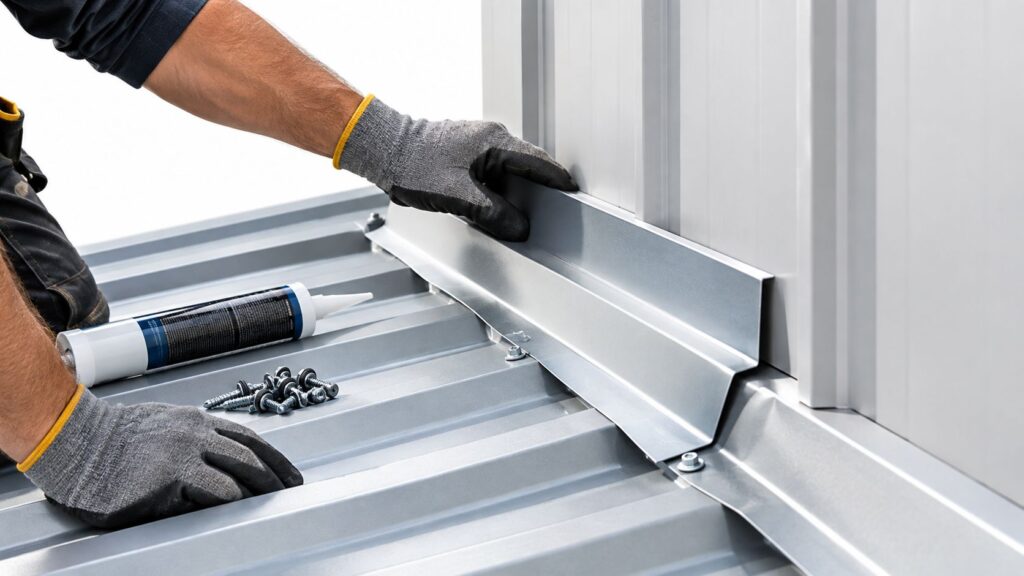
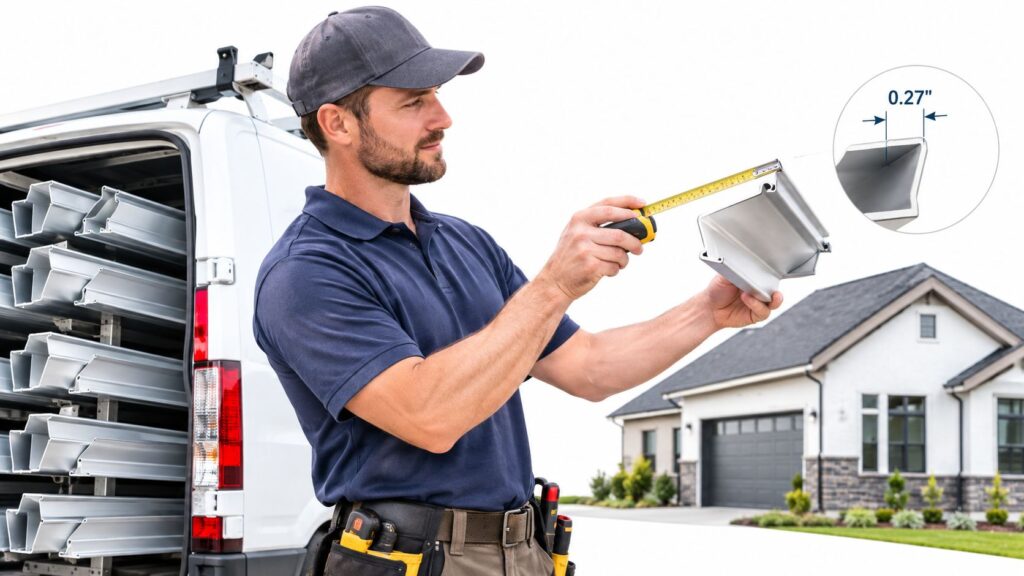
The most popular advice about metal roofing vs asphalt is also the least useful: buy metal because it lasts longer. Longevity matters, but it doesn't tell a Fort Worth contractor whether the owner will recover the higher investment, whether the deck needs expensive rework, or whether a particular panel assembly suits the roof.
A better comparison starts with replacement timing and the complete roof assembly. For contractors working in Fort Worth, Arlington, Mansfield, Burleson, and nearby DFW communities, the right answer comes from matching the building, ownership period, installation requirements, and repair strategy, not dividing a quote by an advertised lifespan.
Table of Contents
- Metal Roofing vs Asphalt at a Glance
- Lifespan, Replacement Count and Total Cost
- Weight, Structure and Installation Demands
- Roof Pitch Suitability From Low Slope to Steep
- Storm, Fire and Heat Performance Compared
- Aesthetics and Maintenance Over the Roof Life
- Which Roof to Choose for Your Building
Metal Roofing vs Asphalt at a Glance
Metal and asphalt roofing side by side
| Criterion | Asphalt shingles | Metal roofing |
|---|---|---|
| Typical service life | 15-25 years | 40-70 years |
| Upfront installed cost | Lower baseline | Roughly 2-3x asphalt, about $8-16 more per sq ft |
| Weight on the structure | About 2.5-4 psf | About 1-2 psf for panel systems |
| Minimum practical pitch | 2:12 with double underlayment, 4:12 standard | 3:12 for exposed fastener, lower for appropriately designed standing seam |
| Typical repair | Replace individual shingles | Panel or seam repair, often specialized |
| Aesthetic range | Wide colors, wood and slate looks | Ribbed, corrugated, standing seam, many finishes |
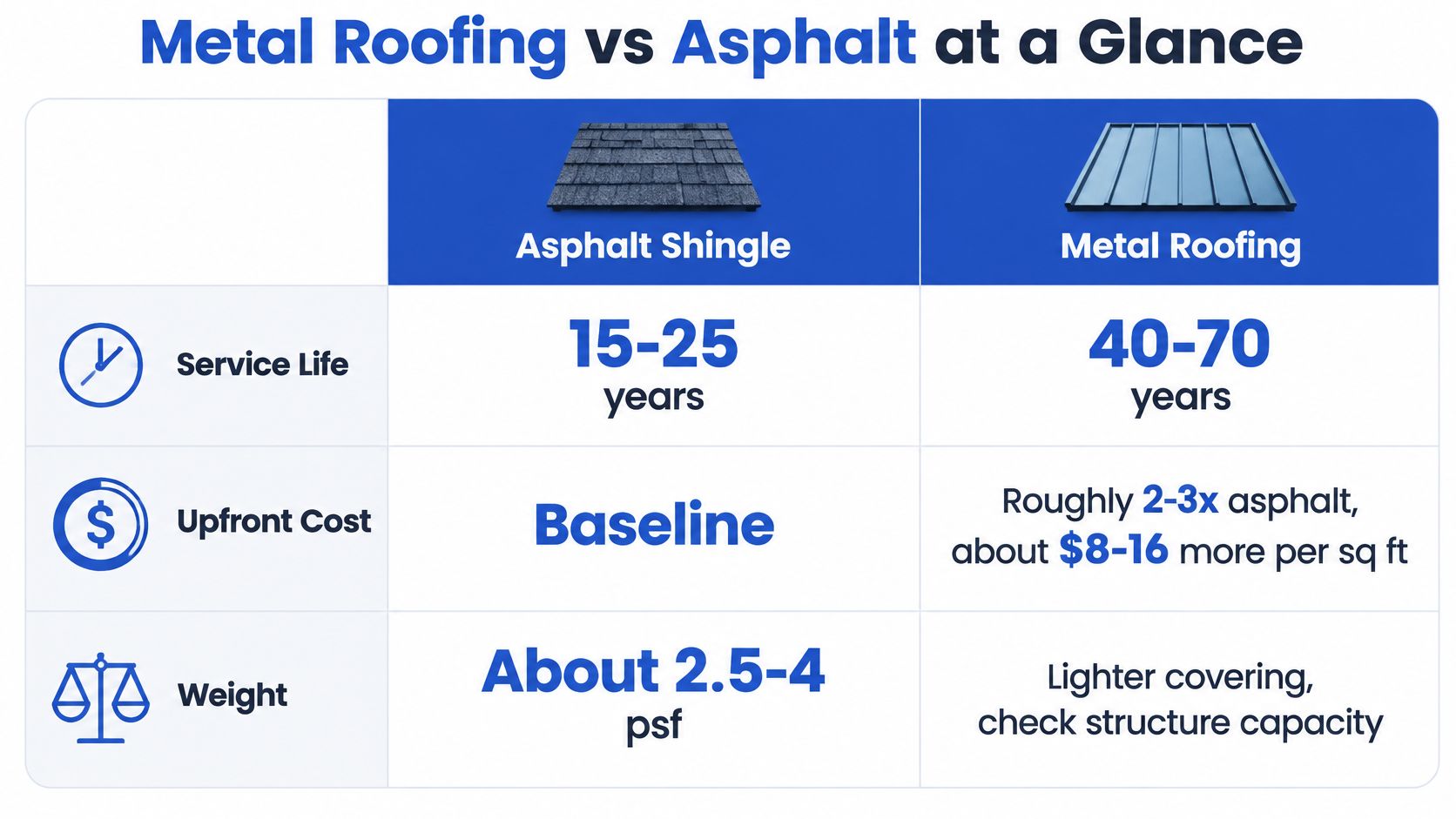
Metal can last roughly two to three times as long, but the upfront cost, roof structure, and owner's holding period decide whether that longevity pays. Treat the table as a screening comparison, not a substitute for product-specific installation instructions, assembly weights, or local bids. The lifecycle and cost assumptions receive their qualifications in the replacement model below.
The visual comparison highlights the main purchasing trade-offs.
Market Acceptance Isn't a Project Specification
Independent Dodge Data & Analytics research, summarized by The Roofing Brief, found that metal increased from 11% of U.S. residential re-roofing demand in 2015 to 14% in 2016, while asphalt declined from 64% to 59%. That historical comparison supports a limited conclusion: asphalt remained the default, while metal gained acceptance where owners could justify a higher specification.
It doesn't establish today's DFW pricing or prove that metal suits every replacement. A straightforward roof in Benbrook and a heavily cut-up roof in North Richland Hills can produce very different metal bids, even when their roof areas are similar.
Estimating rule: Compare complete, buildable systems. A shingle quote with replacement flashing and a metal quote that reuses questionable flashing aren't competing prices for the same scope.
For a preliminary decision, asphalt wins on upfront cost, installer availability, and simple repair. Metal wins on service life and covering weight, with a strong case on steep or exposed roofs when the selected assembly meets the site's requirements.
Lifespan, Replacement Count and Total Cost
Replacement timing is the central financial difference. Dataintelo's roofing market report places typical asphalt service life at approximately 15-25 years, compared with 40-70 years for metal, and identifies an estimated metal installation premium of $8-$16 per square foot.
Those are planning ranges, not a Fort Worth price list or a promise of performance. Product quality, installation, ventilation, maintenance, and storm exposure can change the actual replacement date.
Count Installations Before Comparing Dollars
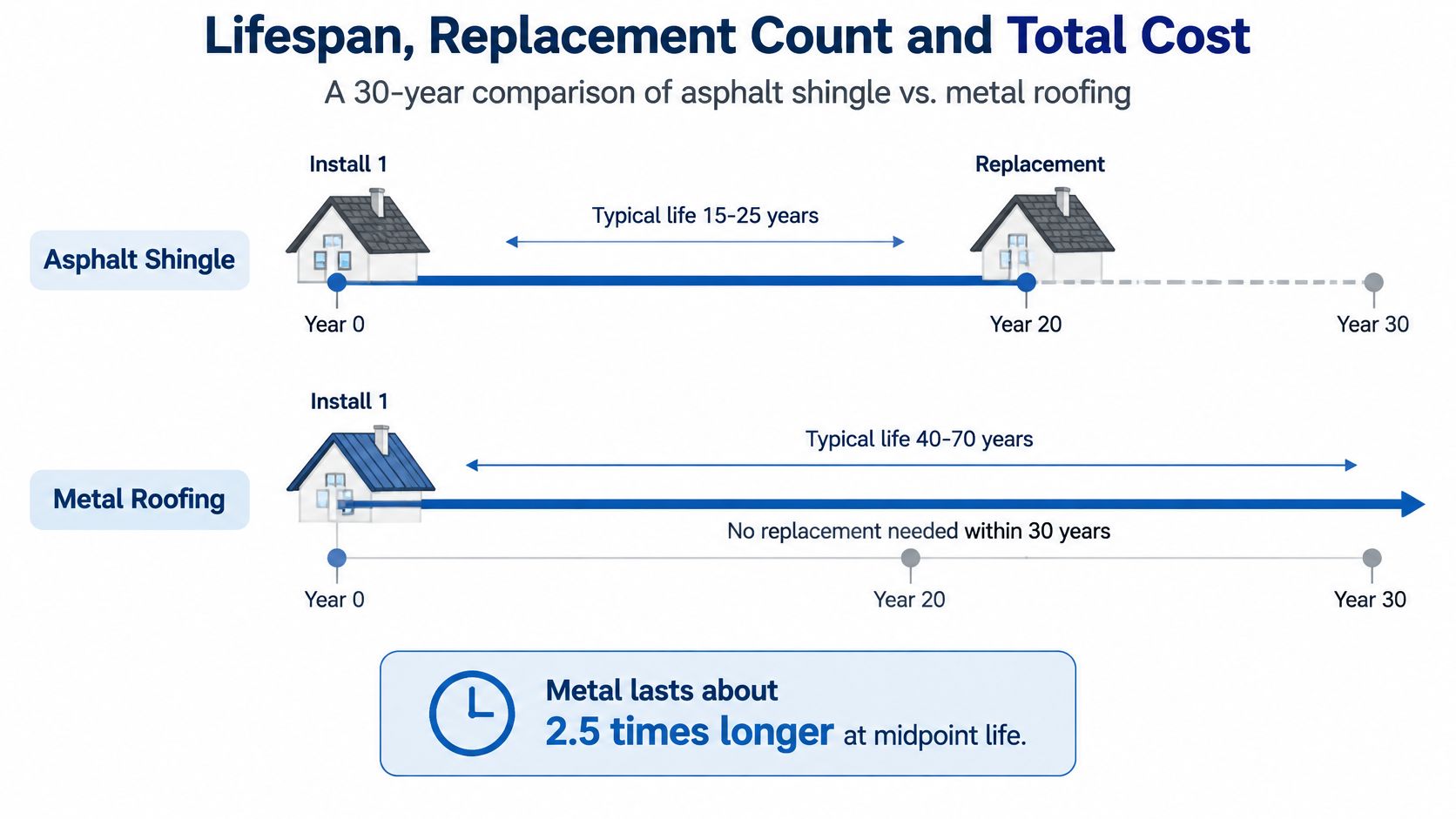
The ownership model below uses midpoint lives of about 20 years for asphalt and 55 years for metal, calculated from those ranges, with the original installation counted. Its longer-period ranges show sensitivity to replacement timing rather than a single guaranteed schedule.
Roofs installed over common ownership periods
| Ownership period | Asphalt roofs installed | Metal roofs installed |
|---|---|---|
| 15 years | 1 | 1 |
| 30 years | 2 | 1 |
| 50 years | 2-3 | 1 |
| 70 years | 3-4 | 1-2 |
For a strict midpoint calculation, the asphalt installation count at the longest horizon sits at the upper end of the table. The lower counts represent roofs performing longer within the stated service-life range; they shouldn't be presented as the midpoint result.
The timeline illustrates why replacement dates matter more than a simple cost-per-year calculation.
A Longer Life Doesn't Guarantee a Lower Total Cost
Dataintelo's global metal roofing market report describes metal's initial installed cost as approximately two to three times asphalt's cost. That relationship exposes an important limitation in the usual sales argument: avoiding a replacement doesn't automatically offset the initial premium.
Say the asphalt bid and a later asphalt replacement together still cost less than the metal installation. Metal hasn't won the cash comparison just because the original panels remain in service. Conversely, repeated tear-off, disposal, access equipment, and business disruption can make a higher initial investment more attractive.
Use a model that places each expense when the owner expects to incur it:
- Asphalt ownership cost: Initial installation, future replacements, tear-off and disposal, repairs, and financing.
- Metal ownership cost: Initial installation, scheduled inspections, sealant or fastener work, coating repairs, future replacement where applicable, and financing.
- End-of-hold adjustment: Consider the remaining roof condition at sale, but don't assume the owner will recover the entire metal premium through resale.
A discounted cash-flow model treats a future expense differently from money paid today. That's especially important when the metal option requires a larger loan immediately, while an asphalt replacement remains a distant obligation.
Test Short, Medium, and Long Holds
For the short-hold scenario, compare cash committed before sale. If neither roof needs replacement during ownership, asphalt's lower initial price can remain decisive; metal needs another measurable justification, such as a required appearance or assembly specification.
For the medium-hold scenario, place the anticipated asphalt replacement on the timeline and test early and late replacement dates. Metal becomes more competitive when the owner actually experiences the avoided replacement, but continued occupancy alone doesn't guarantee a financial win.
For the long-hold scenario, include maintenance and eventual renewal for both systems. Don't assume underlayment, penetration details, exposed fasteners, or coatings will last indefinitely because the covering has a long service-life range.
A roof that survives beyond the owner's holding period provides remaining service life, not an automatic cash return. Keep those benefits separate in the estimate.
Include the Work That Shortens or Extends Service
For asphalt, inspect attic ventilation, heat-related deterioration, and the condition of existing flashing. For metal, examine fastening, clip selection, coating compatibility, and allowances for movement. Moisture-damaged decking and storm damage can undermine either system.
In DFW, model a storm-driven early replacement alongside the normal aging case. Don't assign both materials the bottom of their lifespan ranges merely because the address is in Texas; document the condition or exposure that justifies the assumption.
If the owner is considering zinc metal roofing panels, obtain a separate material-specific package rather than applying a generic metal allowance. Panel material, trim, attachment, and installer requirements belong in that bid.
Use the installation discussion below to prepare questions for the bidding contractor.
Run the ownership scenarios with actual bids from Fort Worth, Arlington, Mansfield, or Burleson contractors. The deciding number is the owner's total cost during the hold, not the lowest advertised cost per year of theoretical roof life.
Weight, Structure and Installation Demands
Metal's lighter covering can help on an older roof, but covering weight isn't assembly weight. Decking, insulation, underlayment, attachment components, and any retained roofing remain part of the structural calculation.
Don't use the screening weights in the comparison table to approve a retrofit. Obtain the selected products' published weights, then identify exactly which existing layers will stay and which will leave the building.
Inspect the Load Path and Substrate
A lighter covering doesn't repair deteriorated decking or inadequate framing. On an older property in Forest Hill, White Settlement, or Haltom City, an overlay proposal should begin with investigation, not an assumption that metal makes the existing roof acceptable.
Before finalizing either system:
- Inspect the deck: Check deterioration, delamination, soft areas, previous patches, and fastener-holding condition.
- Confirm framing information: Record rafter or truss spacing and refer questionable spans, alterations, or distress to the appropriate design professional.
- Verify attachment requirements: Match substrate thickness, fasteners, and spacing to the selected assembly.
- Resolve trapped moisture: Investigate staining and concealed leakage before covering the existing roof.
Underlayment also needs a defined specification. Compare asphalt shingle underlayment options against the selected shingle instructions, roof slope, and flashing details rather than treating every roll as interchangeable.
Price the Installation Method, Not Just the Covering
Shingle installation and metal installation call for different crew capabilities. Metal estimates need explicit allowances for panel cutting, seam formation, trim fabrication, penetration detailing, and handling without finish damage.
Long panels can reduce transverse joints, but the contractor must plan unloading, staging, lifting, and access. A delivery that works for shingle bundles may not work for full-length panels on a tight residential lot.
| Installation issue | What the estimator should confirm |
|---|---|
| Crew qualifications | Experience with the exact panel or shingle system |
| Site access | Unloading space, lifting route, and protected storage |
| Overlay proposal | Written code and manufacturer acceptance |
| Tear-off scope | Disposal, temporary protection, and concealed-damage allowances |
| Structural concerns | Required repairs before either covering is installed |
Neither material has a blanket right to overlay an existing roof. A weak structure can rule out the proposed assembly, including a metal retrofit, even when its new covering is lighter.
Roof Pitch Suitability From Low Slope to Steep
Pitch can eliminate an option before cost enters the discussion. Measure each roof plane separately, especially additions, porch tie-ins, and transitions where the main roof's slope doesn't describe the whole building.
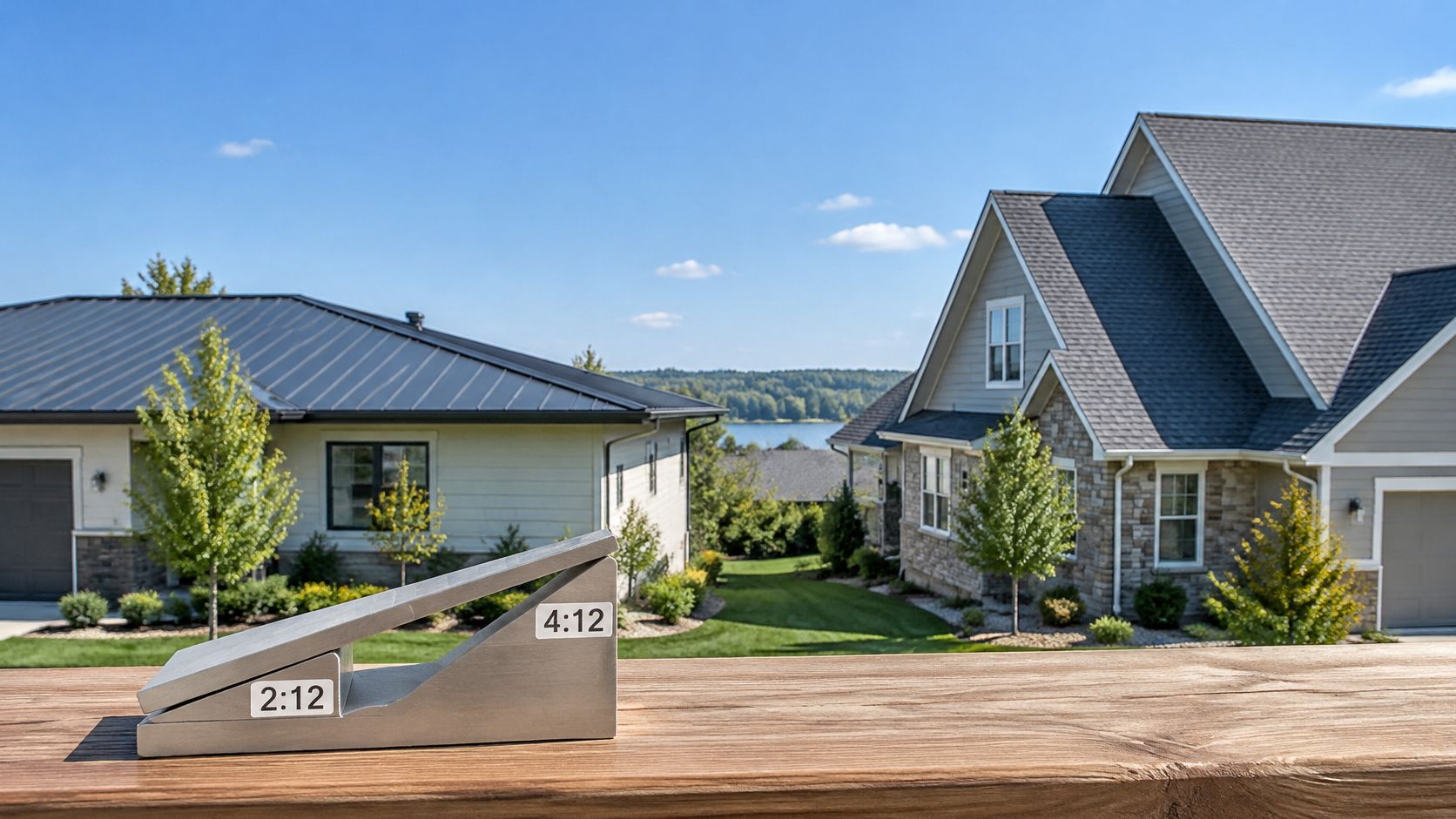
The bands below are preliminary selection guides. Product instructions and assembly approvals govern acceptance, and standing seam isn't automatically suitable for every low-slope application.
Material suitability by roof pitch
| Roof pitch | Asphalt shingles | Metal roofing |
|---|---|---|
| Under 2:12 | Not suitable, use low-slope membrane | Not suitable for exposed fastener, standing seam only with specialist design |
| 2:12 to 3:12 | Possible with double underlayment; confirm warranty eligibility | Slope-rated standing seam; exposed fastener not recommended below its approved minimum |
| 3:12 to 4:12 | Approved low-slope underlayment treatment may still be required | Most panel systems suitable when their listed minimum is met |
| Above 4:12 | Standard and common application | Good drainage and shedding with proper detailing |
| Above 8:12 | More demanding access and safety labor | Harness and handling planning; snow retention where the design requires it |
The pitch model illustrates rise relative to horizontal run.
Low Slope Requires a Different Water Strategy
Below the shingle application range, evaluate a membrane such as TPO or EPDM, or a specifically engineered metal assembly. A sealed seam, approved end-lap detail, and suitable penetration treatment matter more than the generic label “standing seam.”
For a porch or addition, modified bitumen roll roofing may also belong in the low-slope discussion. Specify the transition between that system and the adjacent pitched roof so neither installer leaves the connection unresolved.
Steep Roofs Change Labor and Exposure
On steeper planes, access, material restraint, fall protection, and protection of finished surfaces become estimating items. Metal panels require controlled handling, while shingle crews need staging that doesn't damage installed work.
Snow retention isn't an automatic requirement for every DFW metal roof. Evaluate the applicable design loads and whether sliding snow or ice could threaten entrances, walkways, or equipment.
Before accepting a bid: Get the manufacturer's minimum slope and required underlayment treatment in writing for the exact product.
Pitch also doesn't establish wind resistance. A roof in Aledo or Weatherford still needs attachment and edge details appropriate to its exposure, regardless of how readily the surface drains.
Storm, Fire and Heat Performance Compared
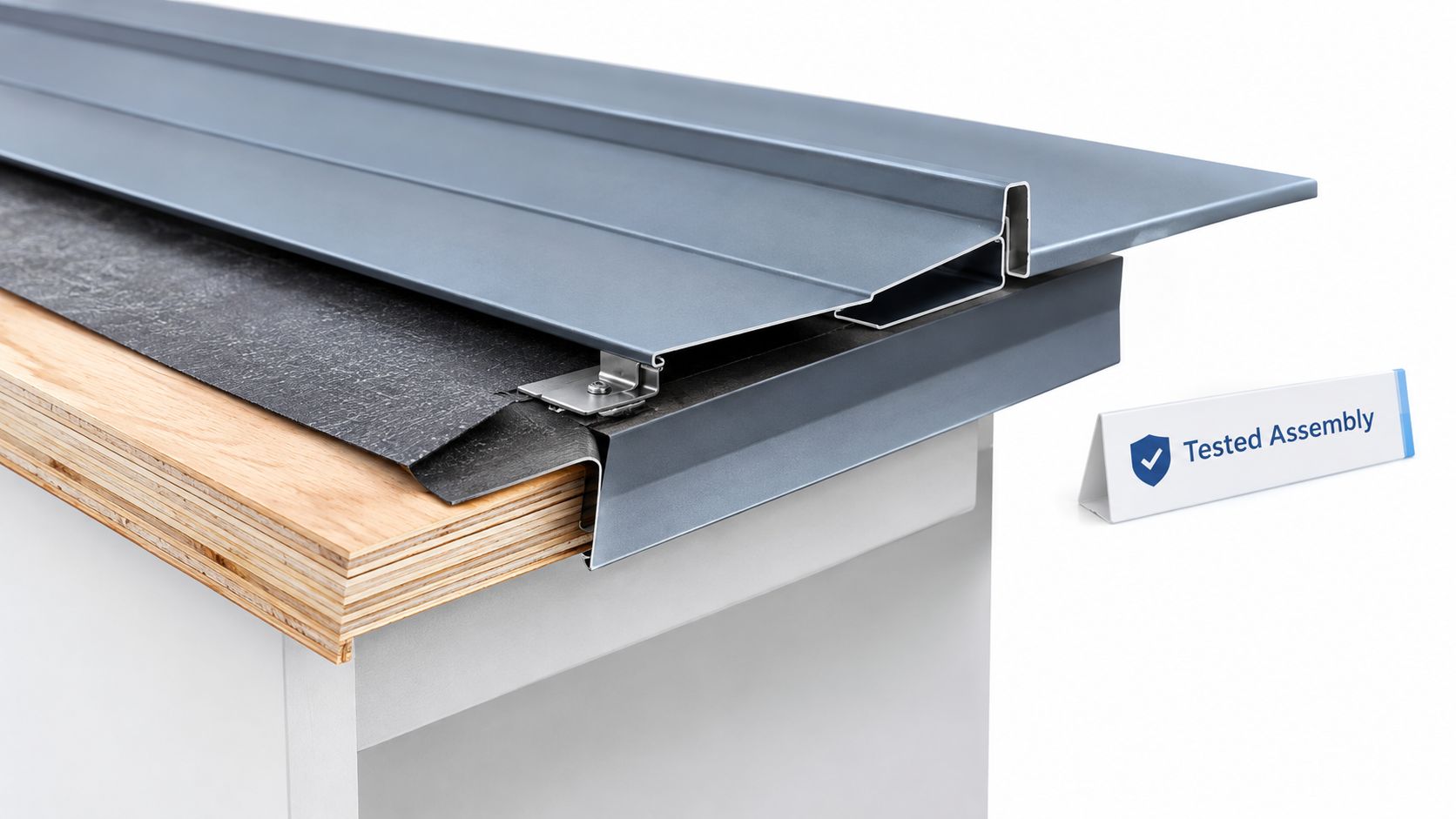
The covering alone isn't the specification. Wind and fire performance depend on the tested roof assembly, including the deck, underlayment, attachment, edges, and penetrations.
FEMA's fire-resistant materials and assemblies guidance identifies Class A under ASTM E108 or UL 790 as the highest fire classification, achievable by most asphalt shingles and many metal systems; it also directs attention to ASTM D3161 Class F or ASTM D7158 Class G/H for asphalt wind classification and, where appropriate, ASTM E1592 testing for metal-system uplift.
| Performance question | Asphalt verification | Metal verification |
|---|---|---|
| Wind | Product classification matched to project design requirements | Assembly pressure resistance and attachment schedule |
| External fire | Listed assembly, not just the shingle label | Listed assembly, including substrate and underlayment |
| Hail | Exact product's impact-test documentation | Exact panel assembly's impact documentation |
| Heat | Reflectance and thermal-emittance information | Reflectance and thermal-emittance information |
Fire Results Need Their Proper Scope
A pilot study of roofing materials under wildland–urban-interface fire conditions found that its metal sample had the smallest charred plywood/OSB area, while asphalt performed worst for flame spread. That's a reason to investigate metal for fire-exposed sites, not proof that every metal-roofed building will outperform every shingle-roofed building.
Vents, eaves, penetrations, and surrounding fuels still need attention. A covering comparison can't resolve those vulnerabilities.
The assembly cross-section shows why the concealed layers belong in the specification.
Hail Resistance Includes the Repair Outcome
For products marketed with a UL 2218 Class 4 impact rating, request the actual documentation for the specified shingle or panel assembly. Don't treat the rating as a promise of no visible damage or an assurance of insurance coverage.
A dented metal panel may remain watertight yet fail the owner's appearance expectations. A damaged standing seam can also require specialized removal and replacement, while localized shingle damage may allow a smaller repair scope.
Ask who will inspect storm damage, what constitutes functional damage, and how the contractor will obtain matching replacement material. Those answers matter on exposed sites in Mansfield and Burleson.
Cooling Depends on the Finish and Building
The U.S. Department of Energy's cool asphalt shingles guidance reports that replacing a conventional roof with a cool roof can reduce annual air-conditioning energy use in a single-story building by up to 15%, and that conventional cool asphalt shingles typically have solar reflectance of 0.30 or less. Neither statement establishes a metal-versus-asphalt savings rate for a particular DFW house.
Compare the actual finish, insulation, roof geometry, and HVAC conditions. Highly reflective roofs can also increase winter heating demand, so don't enter the maximum cooling benefit as guaranteed annual savings.
For DFW bids, require the complete tested system and fastening schedule, especially at roof perimeters. A material name isn't evidence of superior storm performance.
Aesthetics and Maintenance Over the Roof Life
Asphalt and metal can both suit residential architecture, but they create different visual patterns. Shingles offer textured surfaces and wood-shake or slate-inspired looks; ribbed panels, corrugated profiles, and standing seam create more pronounced lines.
Exposed-fastener panels and concealed-fastener standing seam shouldn't be presented as the same appearance at different prices. Fastener visibility, seam spacing, trim proportions, and penetrations change how the finished roof reads from the street.
Approve Details Along With Color
For a Keller home or a Grapevine renovation, review physical samples outside rather than choosing from a screen alone. Include the ridge, rake, valley, and wall-transition details in the approval process.
Ask the owner to accept the actual profile and finish before ordering custom panels. Where appearance is critical, discuss potential color differences in later repairs and the visual tolerances the manufacturer recognizes.
| Inspection focus | Asphalt shingles | Metal roofing |
|---|---|---|
| Covering condition | Missing, cracked, curled, or deteriorated shingles | Damaged panels, seams, or protective finish |
| Water-management details | Flashing, valleys, and penetrations | Trim joints, penetrations, sealants, and seams |
| Attachment | Lifted or displaced shingles | Exposed fasteners and assembly-specific connections |
| Repair planning | Compatible replacement shingles | Matching panels and qualified repair capability |
Maintenance Should Follow the Product
Don't promise maintenance-free metal or assume asphalt needs attention only after a leak. Establish an inspection schedule from the manufacturer's requirements, the roof's access conditions, and exposure.
For exposed-fastener metal, include washer and fastener condition. For standing seam, inspect connections and details without assuming exposed-fastener maintenance applies to concealed clips; coating scratches and deterioration need manufacturer-approved treatment, not an improvised touch-up.
- Request written duties: Identify required inspections, cleaning methods, and maintenance records.
- Separate warranties: Distinguish finish coverage, material coverage, weather-tightness coverage where offered, and workmanship.
- Plan repair access: Confirm who can service the roof without damaging panels, seams, or adjacent shingles.
Hail-related cosmetic acceptance deserves a separate owner discussion. A roof can remain serviceable while no longer looking the way the owner expected, and that disagreement is easier to resolve before installation than after a storm.
Which Roof to Choose for Your Building
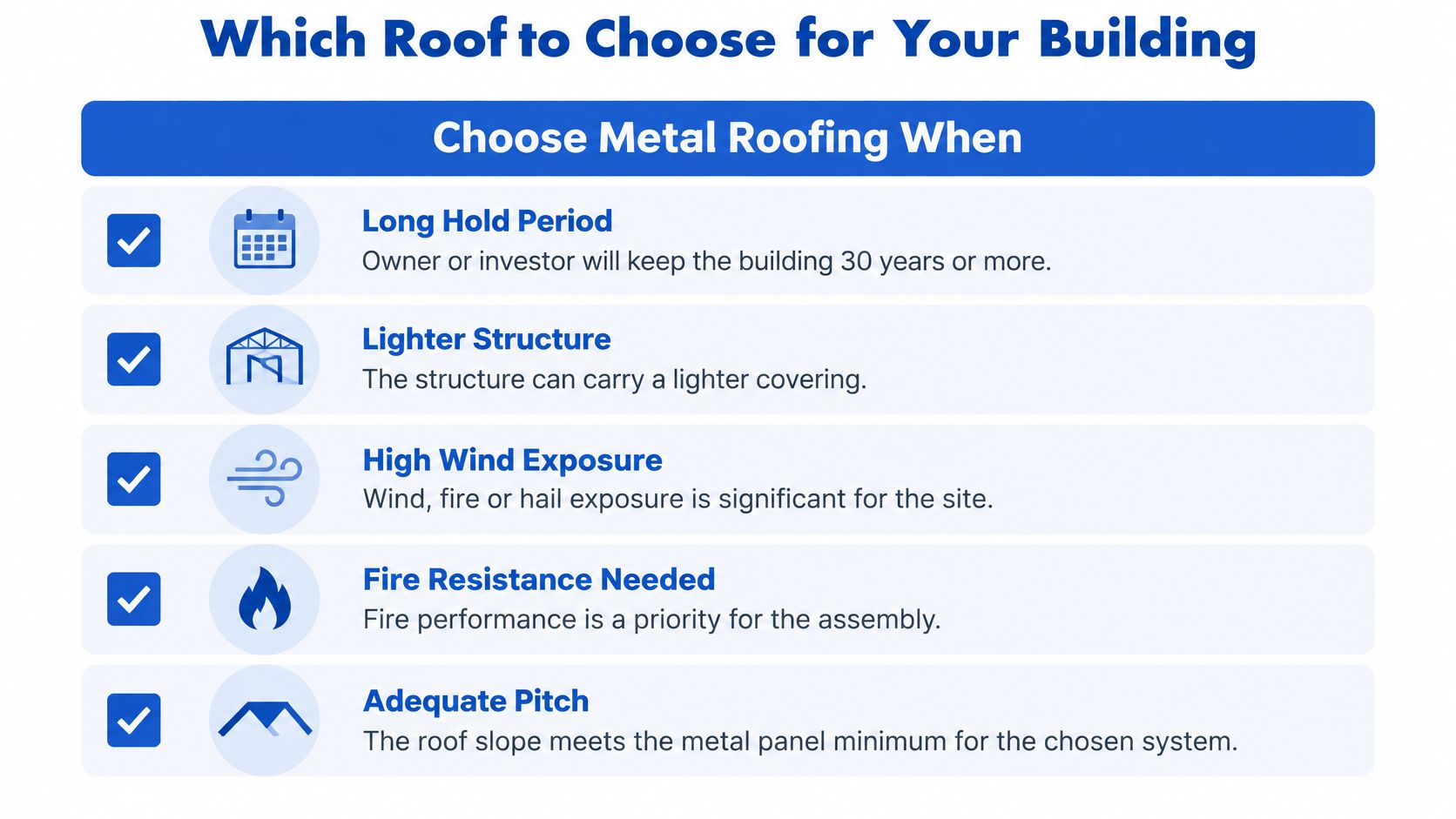
Metal makes sense when the owner can hold the property long enough, the roof assembly suits the building, and credible replacement savings justify the higher initial cost. Asphalt is often the rational choice when upfront cash, straightforward repairs, or metal-specific rework carry more weight. High weather exposure calls for careful product and assembly selection, not an automatic preference for either material.
Which roof fits which situation
| Situation | Better fit | Deciding factor |
|---|---|---|
| Owner stays 30+ years, home in Keller or Grapevine | Metal | Fewer replacements over the holding period |
| Short hold or quick rental turn in Arlington or Fort Worth | Asphalt | Lower upfront cost and familiar installation |
| Hail-prone lot in Mansfield or Burleson | Either, tested Class 4 product | Verified impact rating and tear-off plan |
| Commercial building with 30+ year horizon | Metal standing seam or TPO/EPDM membrane, depending on roof geometry | Lifecycle cost, drainage, and penetration count |
| Existing deck or flashing needing rework | Asphalt when the extra work is metal-specific | Avoids unnecessary conversion costs |
| Roof under 2:12 slope | Neither conventional option, use TPO or EPDM | Pitch rules out shingles and conventional exposed-fastener panels |
These are decision scenarios, not guarantees tied to a city or ownership anniversary. A long holding period strengthens metal's case only if the estimate supports the premium. Necessary deck repairs remain part of either option, and choosing asphalt does not remove them.
The checklist identifies conditions that support requesting a metal proposal.
Apply the Owner's Constraints First
For a long-hold family home, check whether the owner can pay the metal premium without cutting necessary deck, flashing, or ventilation work. For a quick rental turn, a longer service life may offer little value to an investor who expects to sell sooner. A sound, fully specified asphalt roof can make better financial sense in that case.
Commercial owners may value avoiding future disruption more than residential sellers do. Include that operational cost in the comparison, but match the system to the roof. Geometry, penetrations, and drainage may favor a TPO or EPDM membrane over standing-seam metal.
Issue Comparable Bid Requests
Give bidders the same base scope, while allowing them to document system-specific requirements:
- Define demolition and repairs. Match tear-off, disposal, deck inspection, flashing replacement, and concealed-damage allowances.
- Specify compatible layers. Compare equivalent protection goals without forcing identical underlayment where systems require different products.
- Collect written approvals. Request minimum pitch, installation instructions, warranty terms, and applicable assembly documentation.
- Confirm Metroplex logistics. Check panel fabrication, matching trim, accessory availability, delivery access, and crew scheduling before committing.
- Compare ownership cash flows. Include maintenance, financing, replacement timing, and realistic sale assumptions.
The verdict depends on whether the owner can capture metal's longer service life and whether the complete installed assembly earns its premium. If not, asphalt may be the stronger choice.
Blue Lake Roofing Supply offers asphalt shingles, standing-seam panels, trim, clips, fasteners, and low-slope roofing products for contractors in Fort Worth and nearby DFW communities. Visit Blue Lake Roofing Supply with roof measurements and proposed assemblies to ask about current availability, contractor pricing, and jobsite delivery from its Forest Hill yard.