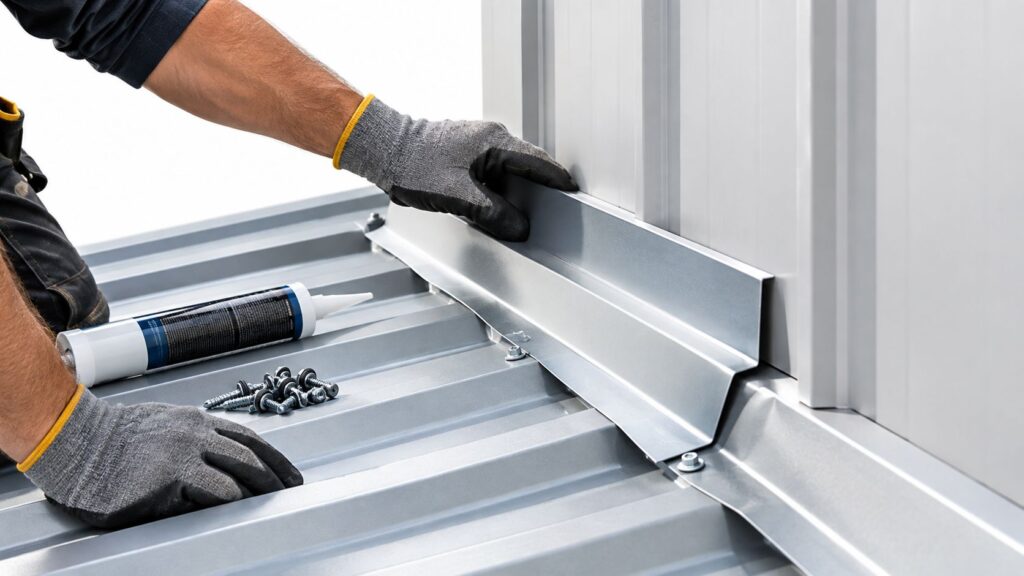
A reroof in Fort Worth, Arlington, or Dallas often starts with the same tension. The homeowner wants the refined appearance of slate, while the contractor has to account for Texas heat, wind, storm exposure, structural capacity, delivery timing, and a budget that can't absorb surprises. The material that looks perfect in a sample may not be the material that makes sense for the structure or the local supply chain.
Slate roofing materials give DFW contractors two practical paths. Natural stone slate offers a proven service life and an authentic finish, while synthetic slate can simplify handling, transportation, and installation. The right specification depends less on the label and more on the roof's structure, the slate's quality, the project's lifecycle goals, and how confidently the material can be sourced in the Metroplex.
Table of Contents
- The Slate Roofing Choice for Dallas-Fort Worth Contractors
- Natural Slate vs Synthetic Slate – Key Differences
- Understanding Slate Grades and Quality Standards
- Roof Structure and Installation Requirements
- Lifecycle Costs and Value Analysis
- Key Takeaways for DFW Roofing Professionals
The Slate Roofing Choice for Dallas-Fort Worth Contractors
The Dallas-Fort Worth market rewards contractors who can balance premium design with dependable execution. Clients in neighborhoods from Aledo and Benbrook to Southlake, Mansfield, and Frisco may ask for a roof that looks permanent, but that request still has to be translated into a workable assembly. A slate roof can deliver that visual authority, yet the decision is not merely natural versus synthetic based on appearance.
Natural slate is the longevity benchmark. The U.S. National Park Service says a properly installed slate roof typically lasts 60 to 125 years or longer, and some slate has remained serviceable for more than 200 years. Those figures come with an important qualifier, proper installation and suitable stone. A contractor who specifies poor-quality slate, ignores the supporting structure, or treats flashing as an afterthought can't expect the service life associated with a well-designed historic roof. The documented service life of slate roofing makes it a serious long-term material, not merely a luxury finish.
DFW conditions make the choice more demanding. Roofs face strong weather events, intense solar exposure, repeated temperature changes, and storm-driven repairs. Natural slate can suit a high-end custom home or a historically sensitive property, but it requires careful material handling and a crew familiar with slate installation. Synthetic slate may be the more practical route when the framing, labor model, or delivery schedule makes full-weight stone difficult.
Practical rule: Specify the roof system before specifying the surface. A premium-looking tile cannot correct an under-designed deck, weak framing, or poor water management.
Underlayment and accessory selection also affect the result. Contractors should coordinate the slate specification with the complete pitched-roof assembly, including asphalt shingle underlayment options where the product and manufacturer requirements call for them. That coordination matters in Fort Worth and surrounding communities because a material substitution made late in procurement can affect fastening, flashing, and warranty requirements.
The best DFW decision is therefore a job-specific one. Natural slate is compelling where authenticity, permanence, and architectural character justify the added planning. Synthetic slate deserves serious consideration where a contractor needs a lighter-handling alternative that preserves the slate profile while fitting a more conventional production workflow.
Natural Slate vs Synthetic Slate – Key Differences
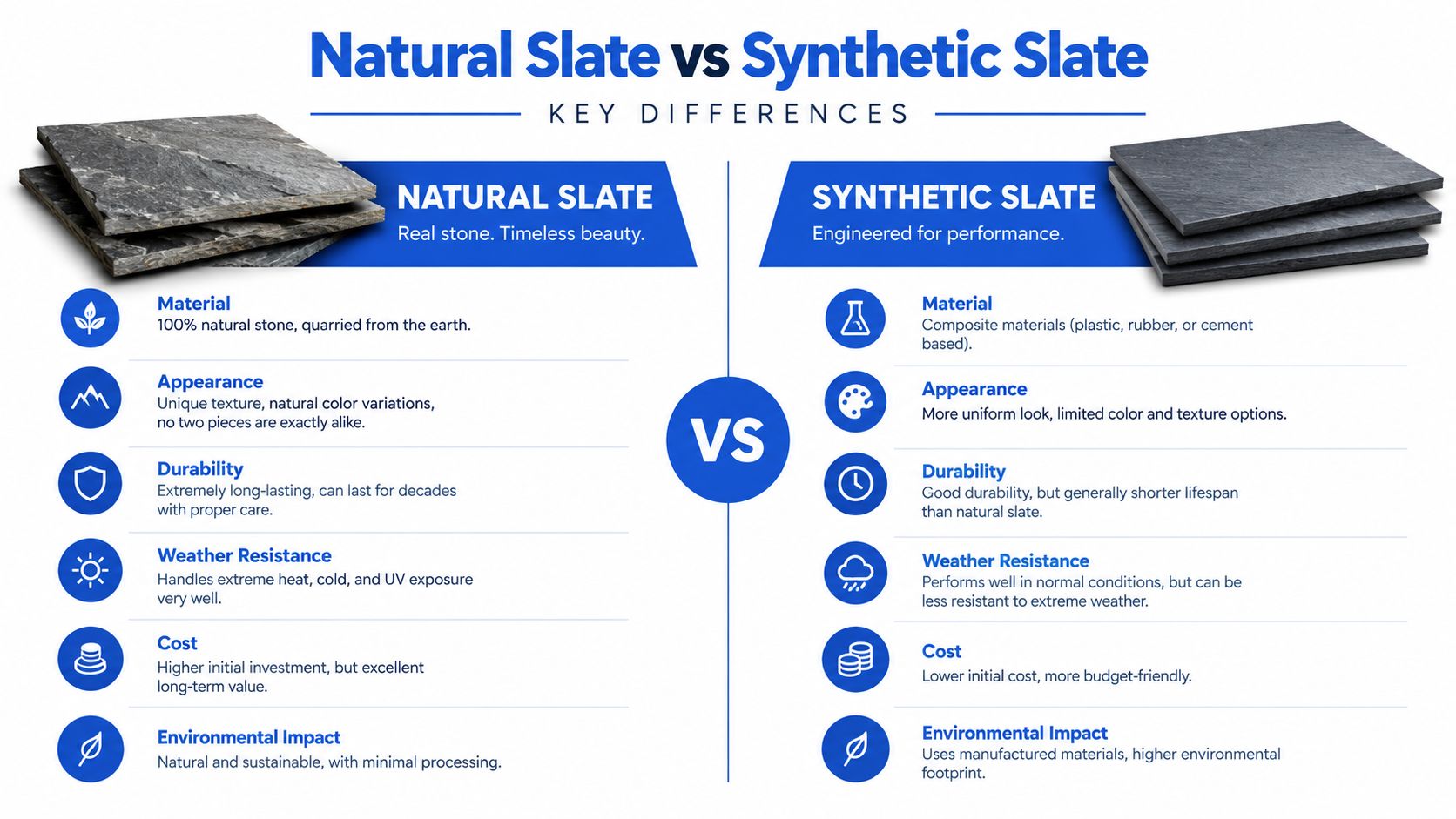
Natural and synthetic slate can occupy the same design category, but they don't behave like interchangeable products. Natural slate is quarried stone, and its variation in color, texture, thickness, and cleavage gives each roof a character that manufactured products work to reproduce. Synthetic slate is engineered to imitate that appearance, often using polymer or rubber-based formulations, and its consistency can make layout and handling more predictable.
Match the material to the roof and crew
Appearance is the clearest difference. Natural stone has authentic cleft lines and a varied surface that suits restoration work, custom architecture, and clients who want a roof with visible material character. Synthetic products can offer consistent color and profile, which helps when a builder needs repeatable results across multiple homes in Arlington, Keller, or McKinney.
Handling and structural demand also separate the two. Natural slate is a dense stone product, so the contractor must confirm that the existing roof structure can carry the proposed assembly. Synthetic slate is generally selected when a project needs a lighter, more manageable product, but the exact weight still belongs in the manufacturer's technical documentation. Never estimate structural suitability from a sample tile.
Impact and storm planning require product-specific review. DFW contractors should ask for the synthetic product's tested impact performance rather than assuming that every polymer slate performs the same way. A product that fits a hail-conscious specification may still have fastening, installation-temperature, or warranty conditions that affect the job.
Sourcing and cost tend to favor different paths. Natural slate can involve more specialized ordering, careful sorting, and a crew that knows how to cut and fasten stone. Synthetic slate often fits a broader distribution network and a more familiar installation process, but its price and warranty vary by manufacturer. The cheapest box price isn't a useful comparison if the product creates delays or requires unfamiliar labor.
For a high-end home in Westlake, natural slate may be the right architectural answer. For a reroof in an older Fort Worth neighborhood where structural modifications are limited, a well-documented synthetic option may reduce installation complications. The contractor's responsibility is to compare the full assembly, not just the face of the tile.
Understanding Slate Grades and Quality Standards
Not every piece of slate deserves the same service-life expectation. The stone's density, porosity, absorption behavior, strength, and ability to split cleanly all affect whether it belongs on a long-term roof. The National Park Service explains that slate's cleavage and grain allow it to be split into thin shingles, while its low porosity and low absorption support durability in service. The National Park Service's slate roofing guidance also identifies ASTM C406 grading as a way to distinguish expected performance.
Order by documented performance
Start with the ASTM C406 grade, not a sales description. S1 slate is the key benchmark for demanding roofing work, with an expected service life exceeding 75 years. The specification should identify the grade, source, thickness, color range, and any testing or compliance documentation supplied with the order.
Industry descriptions may also use terms such as architectural, standard, or utility grade. Those labels can help organize a product line, but they shouldn't replace the applicable performance documentation. Ask the supplier what the label means, which ASTM classification applies, and whether the delivered material will match the approved sample.
Use this ordering sequence:
-
Confirm the quarry and stone type. A named source is more useful than a vague statement that the product is “natural slate.” Different districts can produce stone with different durability characteristics.
-
Request the grade documentation. Verify the ASTM classification and review the manufacturer or quarry information before the material reaches the jobsite.
-
Inspect the shipment. Look for excessive breakage, inconsistent thickness, damaged edges, and pieces that don't split or handle as expected. Set aside questionable material instead of burying it in the field installation.
-
Match the grade to the building. A visible residential roof in Dallas may justify a higher-performing specification than a temporary outbuilding, but both still need a product appropriate for roof exposure.
The National Slate Association guidance summarized by the National Park Service states that ASTM S-1 slate carries a minimum 75-year life expectancy, while many slate roofs perform beyond 100 years and can reach about 150 years. The National Park Service's discussion of natural and synthetic slate puts the quality question in practical terms. Source and grade matter as much as the word slate on the invoice.
Roof Structure and Installation Requirements
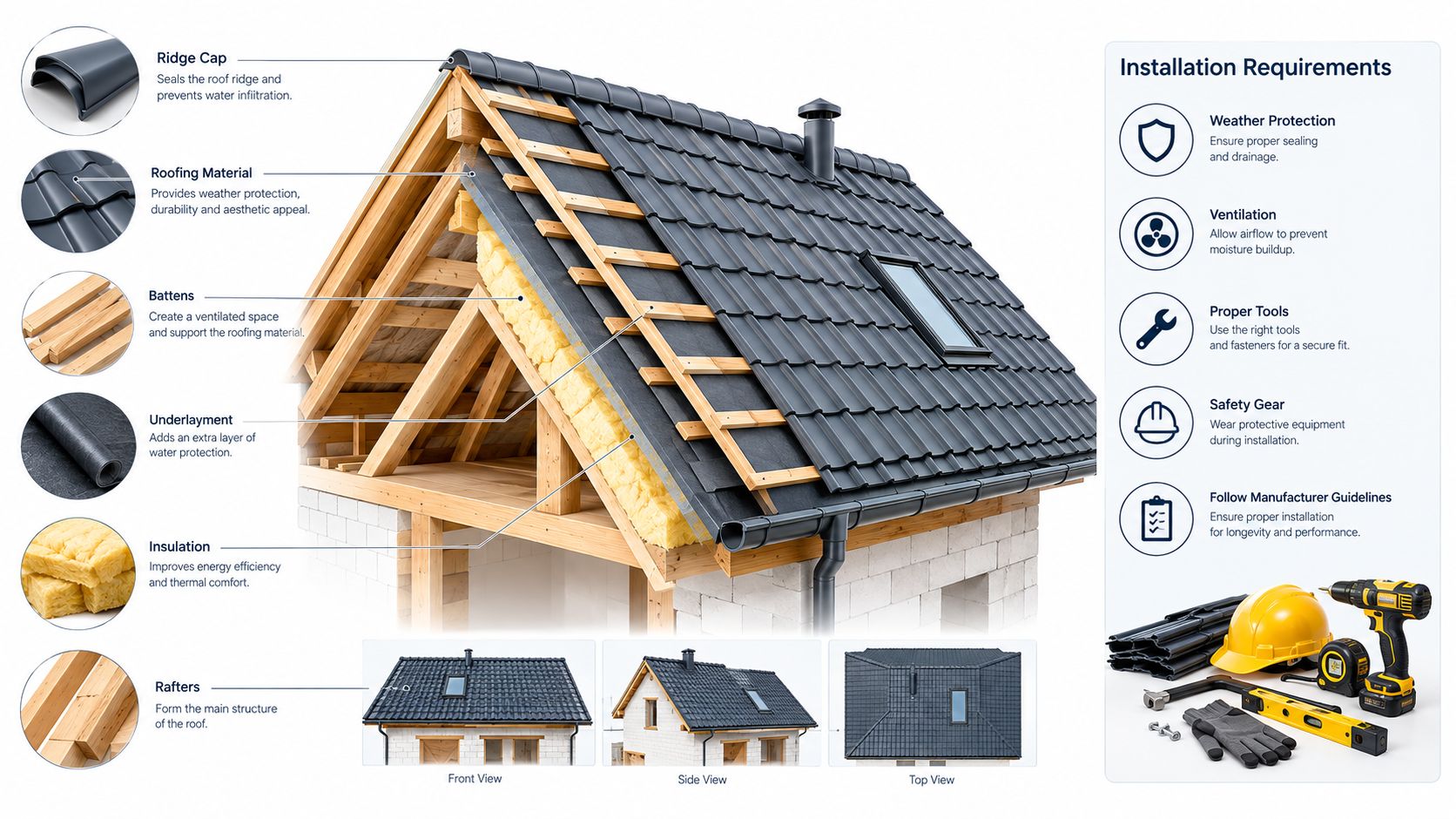
A slate specification starts with the structure, especially on an existing home. Before ordering material for a project in Fort Worth, Grapevine, or Richardson, inspect the framing, decking, rafters, trusses, and connections. If the roof was originally built for a lighter covering, the contractor should involve a qualified designer or engineer before assuming that a natural slate assembly can be installed safely.
Build the water-management plan first
The roof deck needs a stable, continuous surface that can accept the specified fasteners. Underlayment should follow the slate manufacturer's requirements and the roof design, with special attention to valleys, wall intersections, penetrations, eaves, and other areas where water can back up or wind can drive rain beneath the covering. Ice and water protection can be useful in vulnerable locations, but it should be selected and installed as part of the complete assembly rather than added as a generic upgrade.
Ventilation deserves the same discipline. A contractor should provide a clear intake and exhaust strategy that works with the roof geometry, insulation arrangement, and local code requirements. Blocking airflow with poorly placed insulation or closing off a ridge path can create moisture and heat-management problems that no slate product can solve.
Control fastening and field handling
Natural slate is unforgiving of careless handling. Use the fasteners, nail length, head size, and placement required by the slate and system design. Overdriving a fastener can crack the material, while incorrect placement can restrict movement or leave the slate vulnerable to failure. The crew should also plan staging so bundles aren't dropped, dragged, or concentrated in one area without structural review.
Synthetic slate still needs a product-specific installation plan. Its lighter handling profile doesn't eliminate the need to follow approved fastening patterns, flashing details, ventilation requirements, and manufacturer limitations. Contractors should also verify how the product is cut, how the courses align, and how accessories integrate at ridges and hips.
For retrofit work in historic areas of Fort Worth or Dallas, preserve the visual rhythm of the original roof while inspecting the hidden structure. Reinforcement may be appropriate, but it should be designed rather than improvised. Coordinate slate accessories with the rest of the exterior package, including related zinc metal roofing panels where the project calls for durable architectural metalwork.
The installation succeeds when the crew treats the roof as a system. Slate, underlayment, flashing, ventilation, fasteners, and structure all have to work together. A premium surface installed over weak preparation remains a weak roof.
Lifecycle Costs and Value Analysis
Homeowners often compare slate with another roof by looking only at the first proposal. That approach hides the key financial question: how many replacement cycles, repair periods, disposal events, and maintenance demands will the property face over its ownership horizon?
A comparative market analysis gives slate a strong long-term position. Spanish slate is described as lasting 100 years or more, with annual lifecycle costs around £0.25 to £0.60 per square meter. The same comparison places fiber cement at about 30 years and roughly £1.10 per square meter annually, while clay tile is listed at 40 to 50 years and approximately £1.25 per square meter annually. These figures come from a lifecycle comparison of slate and alternative roofing materials, and they illustrate why installation price alone can mislead a property owner.
Put the replacement cycle on the proposal
A useful DFW estimate should separate:
- Initial installation: Include structural review, tear-off, preparation, accessories, specialty labor, and delivery.
- Maintenance exposure: Account for inspection access, damaged units, flashing work, and the availability of matching replacement material.
- Replacement timing: Show whether the competing material may require another major roof project during the building's ownership period.
- Disposal and disruption: Consider the labor, waste handling, tenant interruption, landscaping protection, and scheduling burden created by future replacement.
Natural slate often has the stronger lifecycle case when the building can support it and the owner intends to keep the property for decades. Synthetic slate can offer a different value proposition, especially when its installation is more compatible with existing framing and the contractor's labor model. It shouldn't be sold as natural stone, but it may be the more practical way to obtain a slate-style roof without redesigning the entire building.
Sustainability also needs a location-specific review. One report places high-quality slate's material-level carbon impact as low as 0.15 to 1.0 kilograms of CO2 per square meter, but it notes that transport can change the result substantially. A Welsh slate roof in Boston has meaningfully higher embodied carbon than the same roof in Cardiff because shipping distance becomes the main driver. The report on roofing-material carbon and origin supports a practical question for DFW buyers: which source makes sense for the site, budget, and carbon target?
For contractors, that is a better value conversation than calling slate expensive or inexpensive. Compare the installed system, expected service period, source, and replacement burden. Then let the owner choose with the full cost visible.
Key Takeaways for DFW Roofing Professionals
A contractor in Fort Worth may approach a slate project differently from one in Dallas, Arlington, Mansfield, or surrounding Tarrant County communities, but the decision sequence stays consistent. First, determine whether the building can support the proposed assembly. Next, choose between natural and synthetic slate based on the owner's design priorities, structural conditions, storm exposure, labor capacity, and material availability.
Natural slate makes sense when the project demands authentic stone, a long service life, and a crew prepared to install it correctly. Synthetic slate is worth evaluating when the project needs easier handling, predictable appearance, or a product that fits an existing structure and distribution plan. Neither choice removes the need for proper flashing, ventilation, underlayment, fastening, and deck preparation.
Use the grade as a purchasing control, not as decorative language. Confirm the quarry, request ASTM documentation, inspect the shipment, and make sure the approved sample matches what arrives. The National Park Service's documented slate guidance shows why this discipline matters, with properly installed roofs commonly lasting 60 to 125 years or longer and higher-performing S1 material expected to exceed 75 years. Those figures belong to suitable stone and sound installation, not to every product marketed as slate.
The strongest proposal also explains lifecycle value. A premium roof can be financially rational when it avoids repeated replacement work, but only if the structure, material source, installation method, and maintenance plan support the expected performance. Contractors who handle those questions early will avoid the most expensive kind of slate problem, a beautiful material specified for the wrong building.
Blue Lake Roofing Supply provides roofing materials, tile, underlayment systems, and related exterior products for professional projects across the Dallas-Fort Worth area. For your next slate, synthetic slate, or pitched-roof specification, visit Blue Lake Roofing Supply to review available supply and contractor support.